
A more personal kind of room
The new luxury is a room that helps you return to yourself.
A home spa does not need to imitate a resort, and a wellness room does not need every device trending online. The strongest spaces remove friction from one or two restorative habits, make comfort easy to reach, and let beautiful materials support the atmosphere without overtaking it.
Ideas worth adapting
Begin with the person - not a shopping list.
Choose only the features that support the user’s actual preferences. A calmer room is usually edited, flexible, and easy to leave.
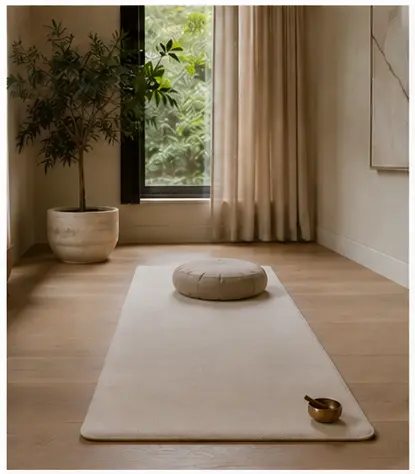
Choose one primary ritual
Decide whether the room is mainly for soaking, stretching, meditation, skin care, reading, or restorative rest before planning the furniture.
Why it helpsA room built around one repeatable behavior is more useful than a room filled with unrelated wellness trends.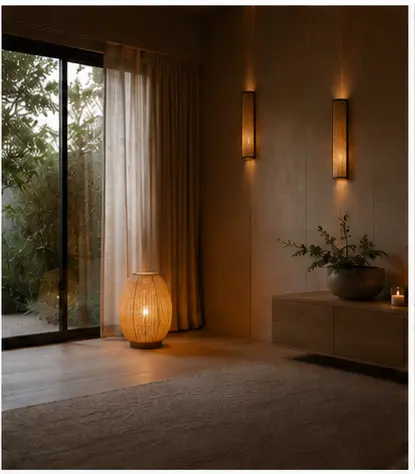
Create a spa-like light sequence
Layer a dimmable ceiling source, shaded task light, and low indirect glow. Put controls near the entrance and main seat.
Why it helpsChanging the lighting marks the transition from everyday tasks to a slower ritual.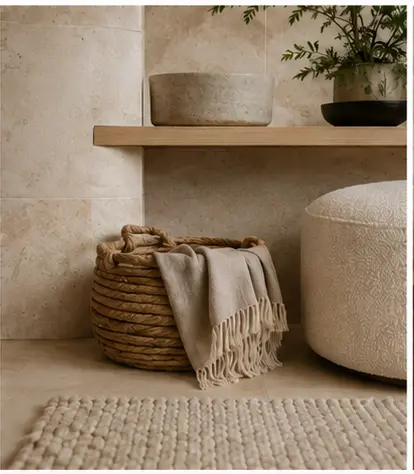
Use materials that feel good up close
Choose washable linen, smooth wood, warm stone, soft cotton, and one plush floor textile where moisture is not an issue.
Why it helpsWellness is experienced through touch and temperature as much as appearance.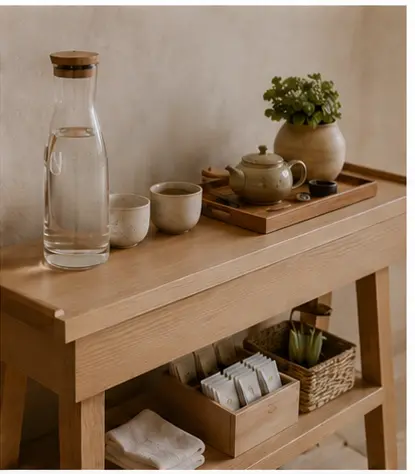
Build an elegant hydration station
Use a small tray or closed cabinet for water, tea, glasses, and napkins. Keep supplements and medical items stored according to their requirements.
Why it helpsConvenient hydration supports the ritual while contained storage preserves visual calm.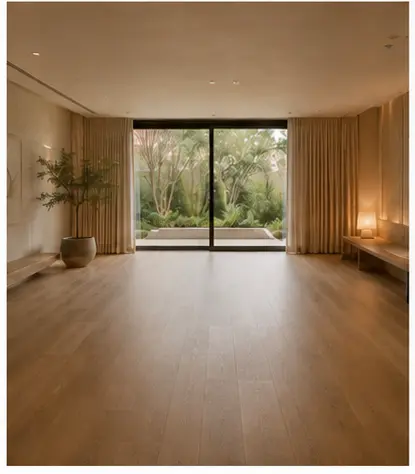
Leave restorative floor space
Preserve enough clear area for a mat, stretching, breathwork, or simply lying down. Use a bench or cabinet that can hold equipment out of sight.
Why it helpsEmpty space is functional in a wellness room - it creates flexibility and reduces setup friction.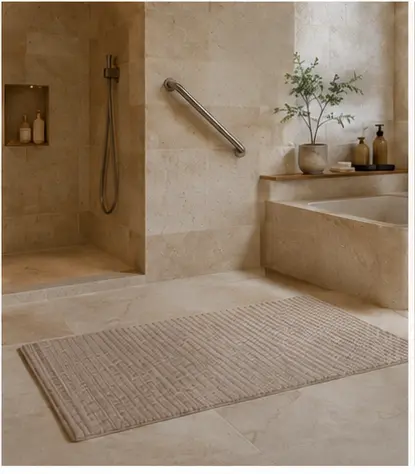
Turn the bath into a spa zone
If the room includes bathing, prioritize ventilation, slip resistance, reachable towel storage, and warm flattering light before decorative accessories.
Why it helpsThe safest practical choices are what allow the room to feel genuinely relaxing.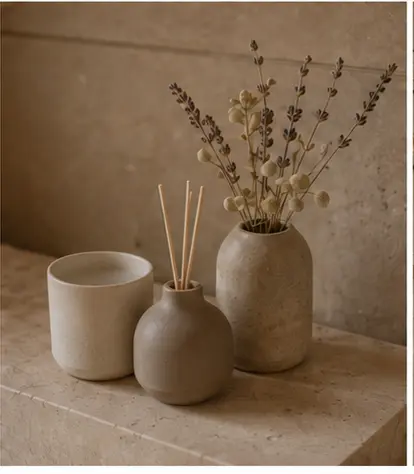
Use scent as an option
Keep fragrance subtle and easy to remove. Ventilate well and offer a fragrance-free version of the room for guests or sensitive household members.
Why it helpsScent can feel restorative to one person and painful or overwhelming to another.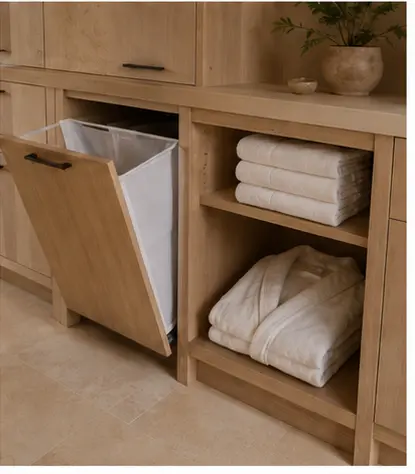
End with a reset station
Provide a lidded laundry basket, towel hooks, wipeable tray, and a five-minute reset routine.
Why it helpsA room that is easy to restore is far more likely to become a lasting habit.The room plan
Comfort should be adjustable.
No sensory preference is universal. Build in choices - brighter or dimmer, still or active, open or enclosed - so the room can change with the person and the day.
- 01Name the ritual you want to repeat three times a week.
- 02Place every essential within one comfortable reach or one short step.
- 03Use dimmable light, optional sound, and fragrance-free defaults.
- 04Invest first in ventilation, comfort, slip resistance, and storage.
- 05Keep technology quiet, concealed, and purposeful.
Before purchasing equipment
Relaxation begins with a room that is safe to use.
- Use slip-resistant surfaces and appropriate ventilation anywhere water, steam, or oils are present.
- Confirm electrical fixtures and devices are rated for their exact location and moisture exposure.
- Follow product directions for heat, sauna, soaking, red-light, aromatherapy, and other wellness equipment; check with a clinician when health conditions or medications may matter.
- Store oils, supplements, cleaning products, and hot tools safely away from children and pets.
- Plan accessible clearances, stable seating, reachable controls, and safe entry and exit for the intended user.
The considered addition
Choosing a luxury home sauna
A sauna belongs in the plan only if you enjoy heat and will use it. Start with your preferred experience, then check the cabin’s fit, placement and power requirements before comparing finishes or extras.
Infrared vs. traditional: which experience suits you?
| Factor | Infrared sauna | Traditional sauna |
|---|---|---|
| Heat | Radiant heat, generally with a lower cabin air temperature. | A heater warms the air and stones for a hotter-air experience. |
| Humidity | Dry heat; do not add water to infrared heaters. | Water on stones only where the heater manual permits it. |
| Before buying | Check heater placement, interior seating and the specific circuit requirement. | Check heater sizing, ventilation, electrical installation and what is included. |
Manufacturer references: infrared buying guide and traditional buying guide.
Measure more than the footprint
Check interior bench dimensions as well as exterior width, depth and height. Allow the manufacturer’s assembly, ventilation and service clearances, plus door swing and a comfortable approach. Trace the delivery route through every doorway and turn.
Choose indoor or outdoor first
Use an indoor model only in an approved indoor location. For outdoor placement, choose a model rated for exposure and confirm its base and site requirements. A covered patio does not automatically make an indoor cabin suitable.
Verify the electrical plan
Sun Home requirements vary by model, including dedicated 120V or 240V circuits. Confirm voltage, amperage, connection type and panel capacity with a licensed electrician using the exact model’s manual before ordering.
Price the complete project
Include electrical work, site preparation, delivery access and assembly in the budget. Confirm warranty and return terms. Sun Home’s standard freight delivery is curbside; moving components to the room and assembling them need a separate plan.
Check Sun Home’s assembly manuals and delivery guidance for your exact model. Manufacturer guidance reviewed September 11, 2026.
Where Sun Home fits
Sun Home is an option to compare when planning an indoor or outdoor sauna. Choose by documented installation requirements, seating comfort and aftercare. This is a planning reference based on manufacturer information, not a hands-on product review.
Follow the sauna’s operating and safety instructions. If a health condition or medication could affect heat tolerance, ask your clinician whether sauna use is appropriate for you.
This design guide is educational and is not medical, therapeutic, or occupational-therapy advice. Sensory needs vary widely. Seek individualized guidance from a qualified professional when equipment, mobility, behavior, sleep, or safety needs require it.
Frequently asked
Practical answers before you begin
How much space does a home wellness room need?
A compact corner may support one simple ritual. Measure the actual furniture and movement clearance; a sauna needs its own model-specific footprint, installation space and electrical plan.
What is the difference between a wellness room and a sensory room?
A wellness room centers chosen restorative rituals. A sensory room centers individualized regulation needs. They may share adjustable light, sound, and comfort, but they should not be treated as the same plan.
What makes a room feel like a spa?
Warm layered light, comfortable temperature, natural tactile materials, concealed supplies, good ventilation, fresh towels, and an easy reset usually matter more than themed décor.
Do I need expensive wellness technology?
No. A supportive seat, clear floor space, good light, water, textiles, and a reliable ritual can create more value than equipment that is rarely used.
How much space should I allow for a home sauna?
Use the exact model’s dimensions and manual. Include clearance for assembly, ventilation, servicing, door swing and access, then check the delivery route. Advertised person capacity does not tell you how much space each seat provides.
Can a Sun Home sauna use a standard outlet?
Do not assume it can. Circuit, voltage, amperage and connection requirements depend on the model. Have a licensed electrician review the current manual and your available electrical service before purchasing.
Can an indoor sauna go on a covered patio?
Only if the manufacturer expressly approves that location for the exact model. A roof alone does not protect an indoor cabin from outdoor humidity, temperature changes or weather exposure.
Continue with purpose
Keep the room’s purpose clear.
Wellness rooms center repeatable restorative rituals. Adult sensory rooms center individualized control over sensory input, movement, pressure, privacy, and decompression. Keep the goal clear before choosing the room plan.
Use the adult sensory-room guide →CollectionThe Restorative HomeReturn to the hub →