
A more personal kind of room
The best room offers choices without demanding a response.
A children’s sensory room should not be built from a viral checklist. One child may seek movement and deep pressure; another may need quiet, low light, and very little visual information. Observe what genuinely helps, involve the child whenever possible, and create a flexible room that can grow with them.
Ideas worth adapting
Begin with the person - not a shopping list.
Choose only the features that support the user’s actual preferences. A calmer room is usually edited, flexible, and easy to leave.
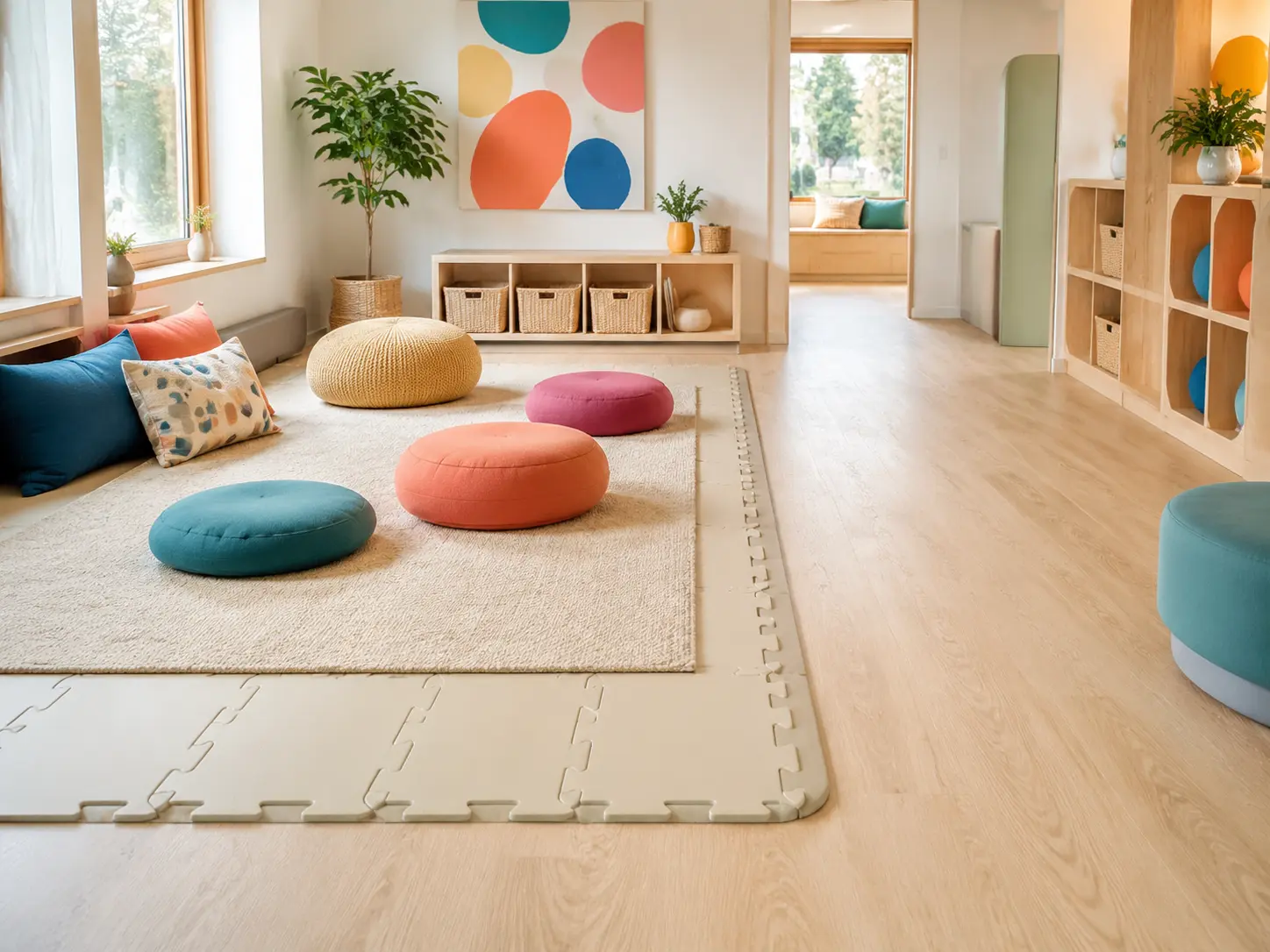
Create a soft landing zone
Begin with a washable low-pile rug, interlocking mat, or padded floor area in one defined section. Keep the main route through the room clear.
Why it helpsIt gives floor play and body-based activities a more comfortable boundary without turning the whole room into equipment.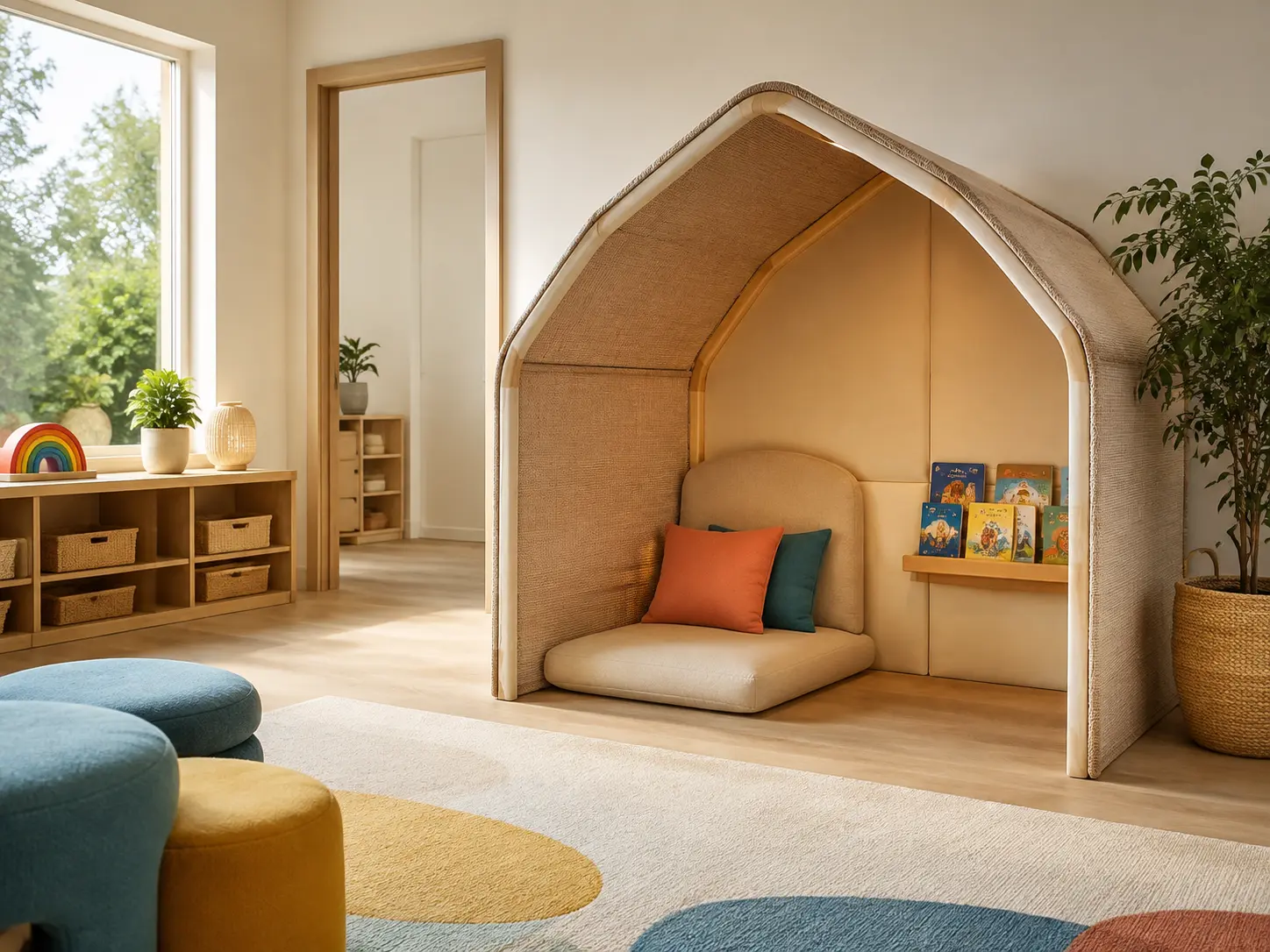
Offer a small retreat - not forced isolation
A canopy corner, pop-up den, or open-front cocoon chair can offer visual shelter. Make sure the child can enter and leave independently.
Why it helpsSome children regulate more easily with reduced visual input and a sense of enclosure.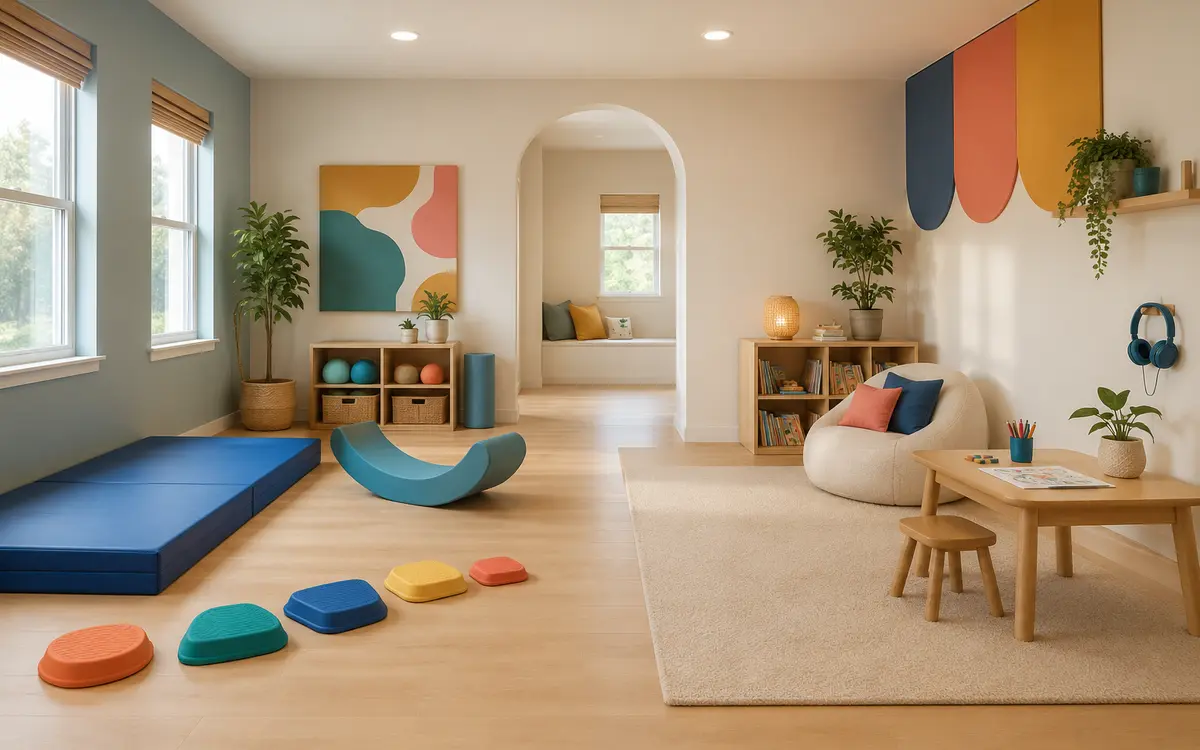
Separate active and quiet choices
Place movement equipment on one side and books, soft seating, drawing, or headphones on the other. Avoid making every sensation happen at once.
Why it helpsClear zones make the room easier to understand and allow a child to choose the amount of input.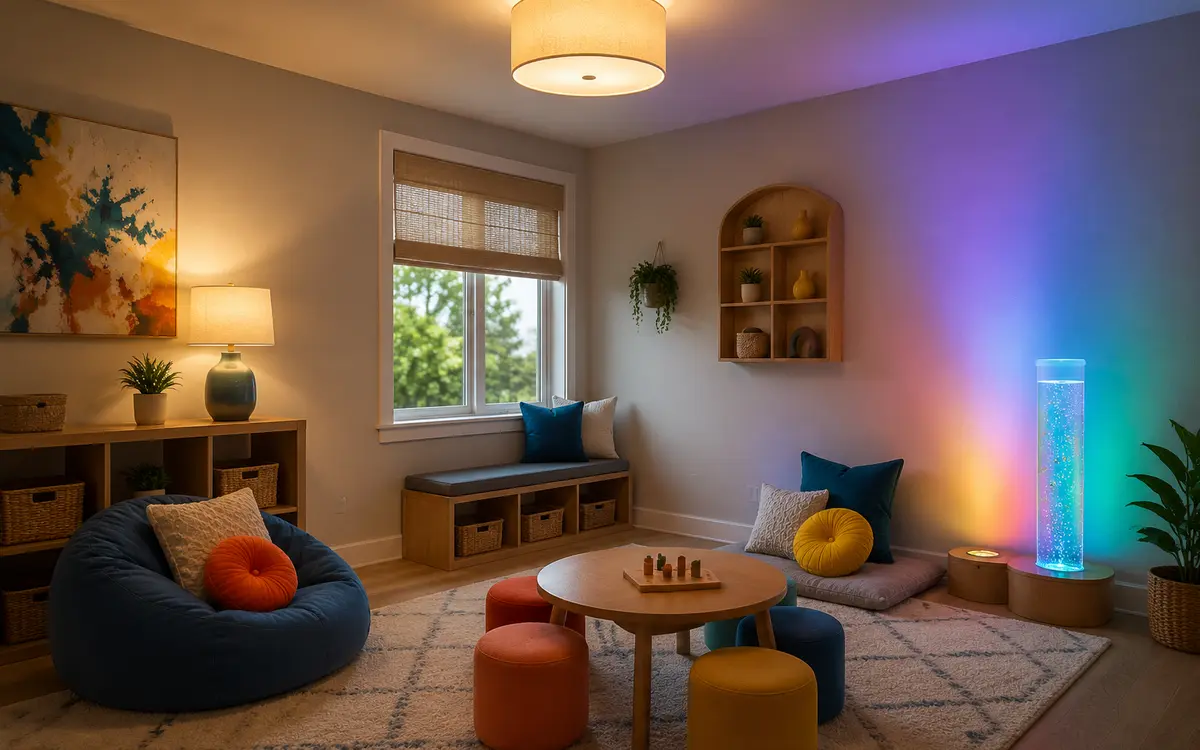
Use lighting in layers
Pair a dimmable warm overhead source with a shaded lamp and an optional low-glow sensory light. Eliminate visible flicker and cover dangling cords.
Why it helpsAdjustable lighting can support different activities and sensitivities better than one bright fixture.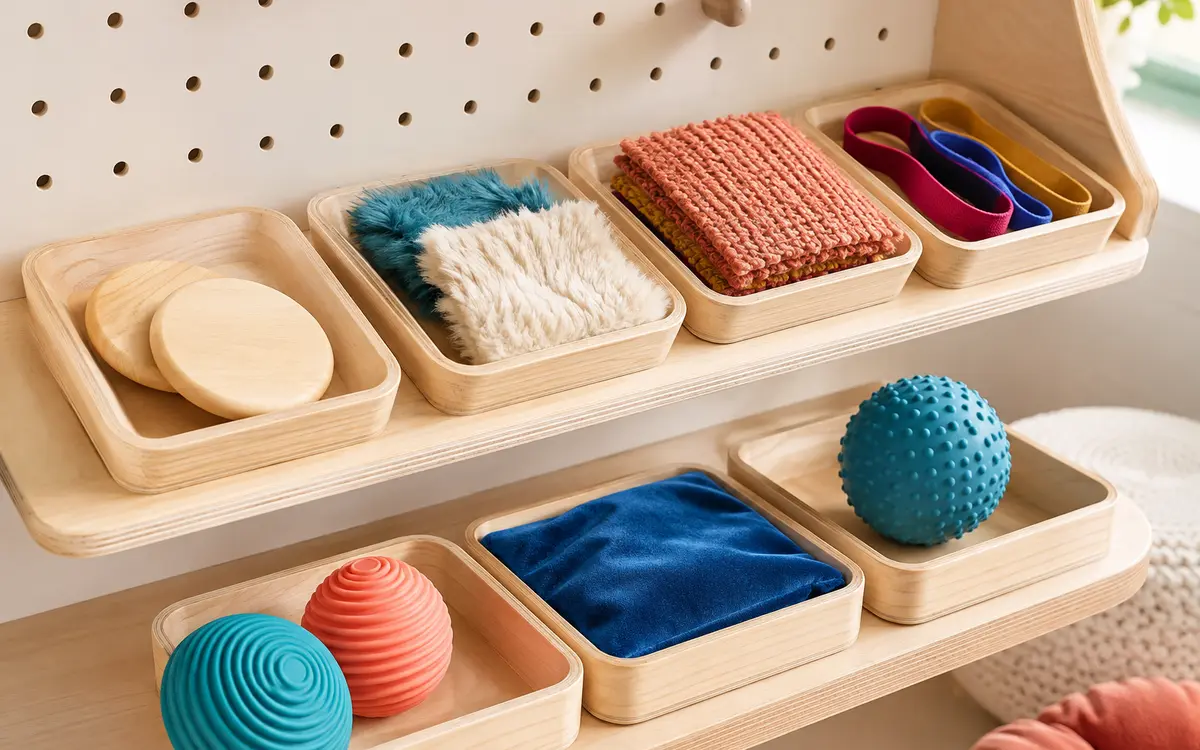
Build a small tactile library
Use a shallow bin or wall board with a few varied textures - smooth, soft, nubby, stretchy - and rotate them instead of displaying everything.
Why it helpsA limited, organized selection invites exploration without creating visual overload.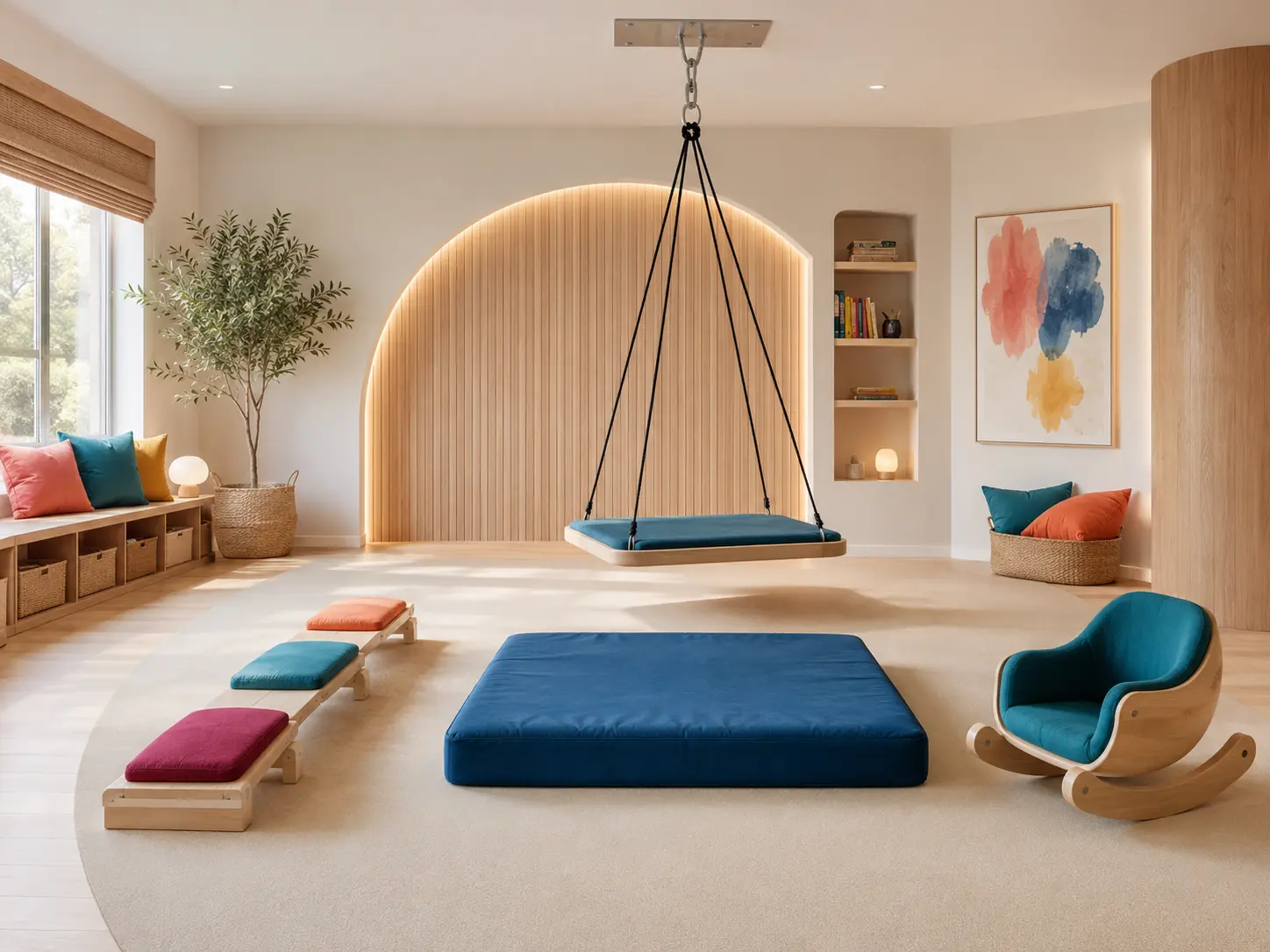
Make movement equipment purposeful
Consider a rocking seat, balance path, crash pad, or professionally installed swing only when it matches the child’s needs, space, and supervision plan.
Why it helpsMovement may help some children organize their bodies, while others may find it overstimulating.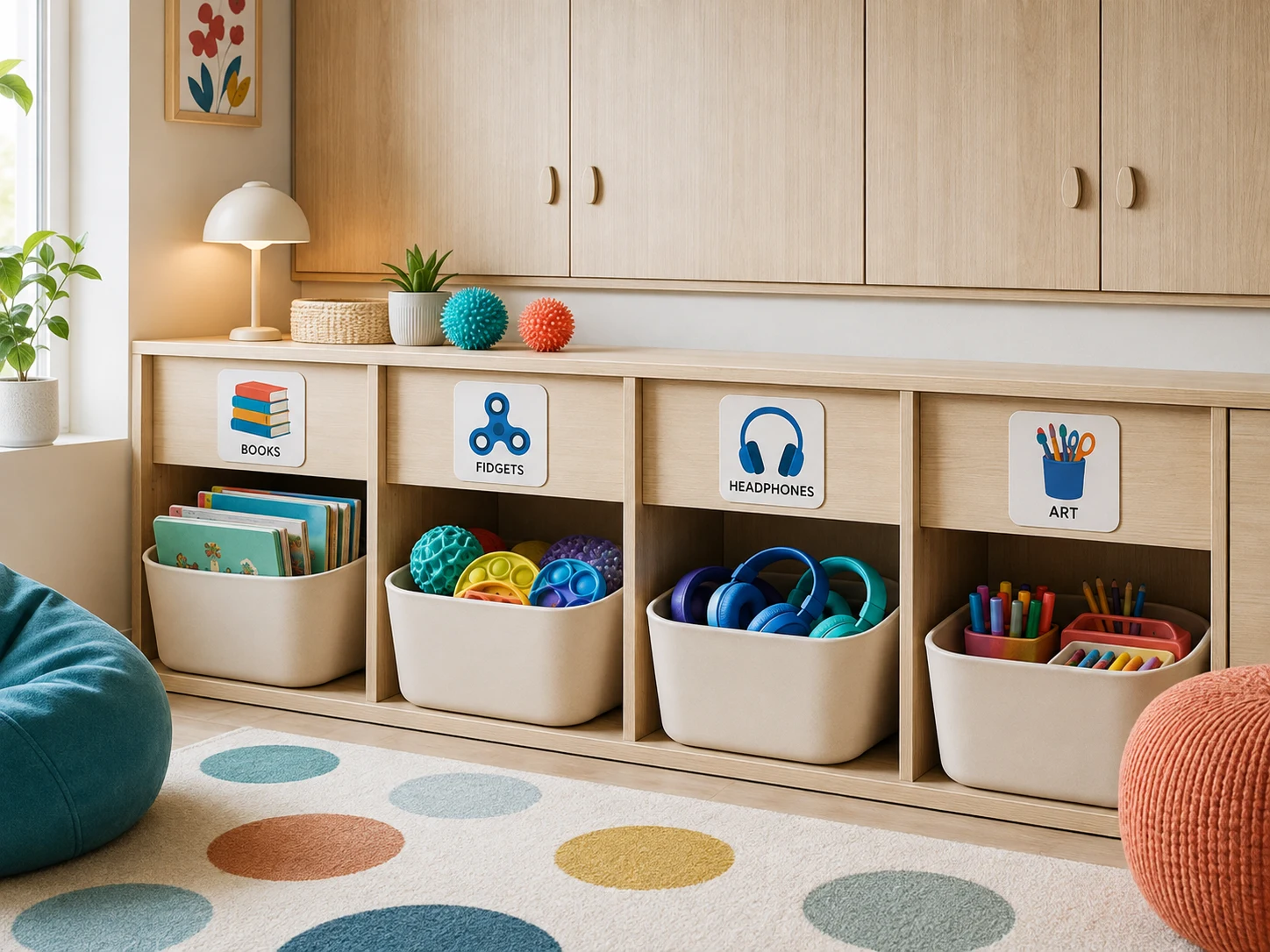
Use picture-based homes for belongings
Label low bins with a photo and one simple word. Keep the most-used tools visible and store extras behind a door.
Why it helpsPredictable storage supports independence and makes resetting the room easier.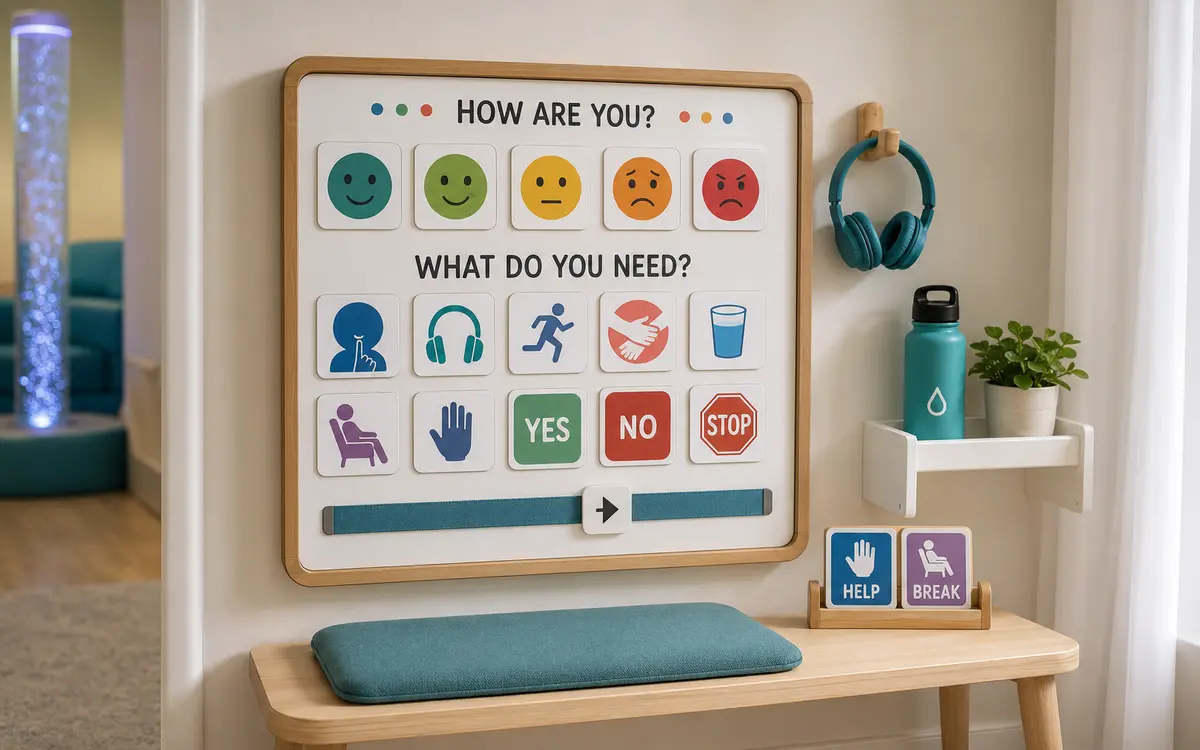
Add a feelings-and-needs station
Display a small choice board for quiet, squeeze, move, drink, headphones, break, or help - using language or symbols the child already understands.
Why it helpsThe room becomes a place for supported communication, not merely a collection of sensory products.The room plan
Comfort should be adjustable.
No sensory preference is universal. Build in choices - brighter or dimmer, still or active, open or enclosed - so the room can change with the person and the day.
- 01Observe the child across several days before choosing equipment.
- 02Create one clear active zone and one clear quiet zone.
- 03Give the child an easy way to say yes, no, stop, more, or leave.
- 04Rotate tools rather than displaying every option at once.
- 05Review the setup as height, strength, mobility, and interests change.
Before purchasing equipment
Secure first. Supervise appropriately. Recheck often.
- Anchor climbing, hanging, or swinging equipment only to structures rated for the load and follow manufacturer installation requirements.
- Keep cords, batteries, small parts, water features, and heat sources inaccessible when they present a risk.
- Choose fire-safe, washable materials and verify age, weight, and mobility guidance for every product.
- Maintain a clear exit and line of sight appropriate to the child’s supervision needs.
- Stop using any item that causes pain, distress, dizziness, breathing difficulty, skin changes, or unsafe behavior.
This design guide is educational and is not medical, therapeutic, or occupational-therapy advice. Sensory needs vary widely. Seek individualized guidance from a qualified professional when equipment, mobility, behavior, sleep, or safety needs require it.
Frequently asked
Practical answers before you begin
Does every autistic child need a sensory room?
No. A dedicated room is optional, and many children benefit more from small supports placed where daily life happens. Individual preferences matter more than diagnosis.
Can I make one in a small bedroom corner?
Yes. A dimmable lamp, soft seat, headphones, one movement option, and a small labeled basket can create a useful sensory corner.
What colors are best?
There is no universal calming color. Begin with a restrained backdrop, then let the child’s actual response guide color, contrast, and pattern.
Should siblings share the room?
They can, but define expectations, personal storage, and quiet access. A retreat space should not become another place where a child must compete for regulation.
Continue with purpose