
A more personal kind of room
Adult sensory needs deserve design - not disguise.
A sensory room for an adult can look like a library, lounge, listening room, or quiet office. The purpose is not to hide the supports; it is to integrate them with dignity. Start with the user’s real triggers, preferred input, mobility, and routines, then design for choice and control.
Ideas worth adapting
Begin with the person - not a shopping list.
Choose only the features that support the user’s actual preferences. A calmer room is usually edited, flexible, and easy to leave.
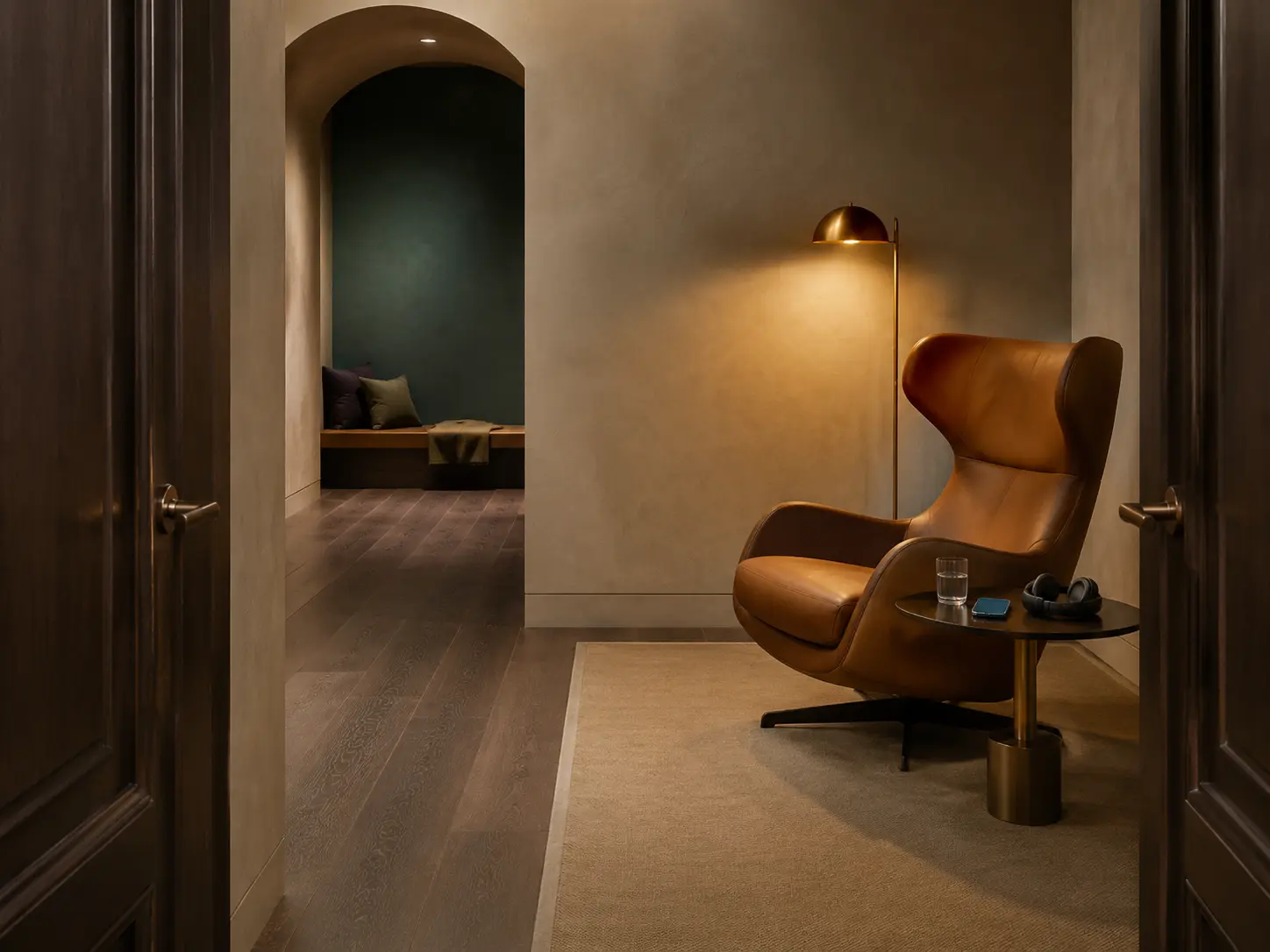
Design a low-stimulation arrival
Keep the first view uncluttered: one supportive chair, one warm pool of light, and a clear place for a drink, phone, or headphones.
Why it helpsA visually simple entrance asks very little from a tired nervous system.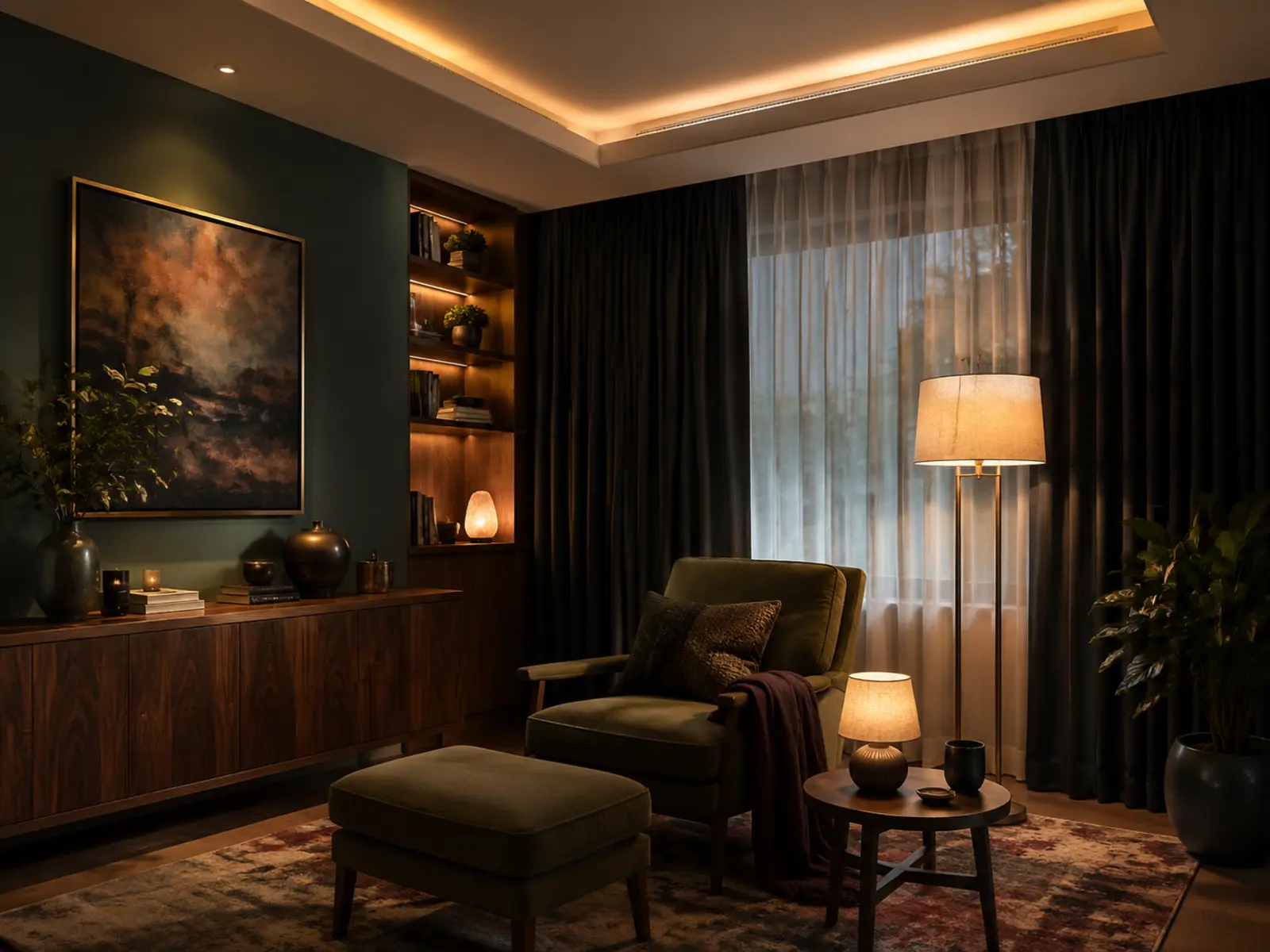
Make light fully adjustable
Use dimmable, high-quality warm lamps at different heights. Add blackout or filtering curtains and avoid exposed bulbs in the direct sight line.
Why it helpsControl over brightness and glare can make the same room useful for daytime focus and evening decompression.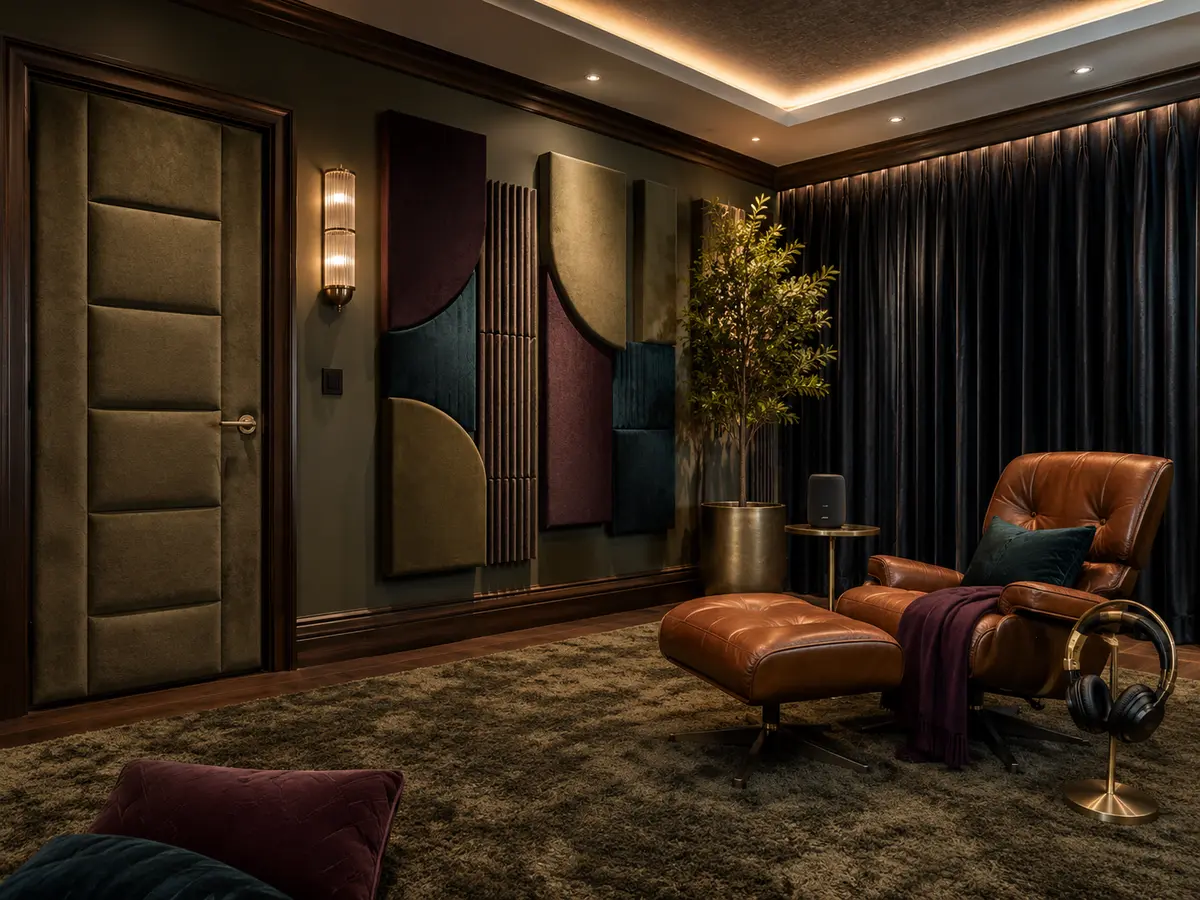
Create a sound plan
Combine a closed door, lined curtains, a substantial rug, acoustic art, and optional brown noise or noise-canceling headphones.
Why it helpsSoft materials reduce sharp reflections, while personal audio gives the user another layer of control.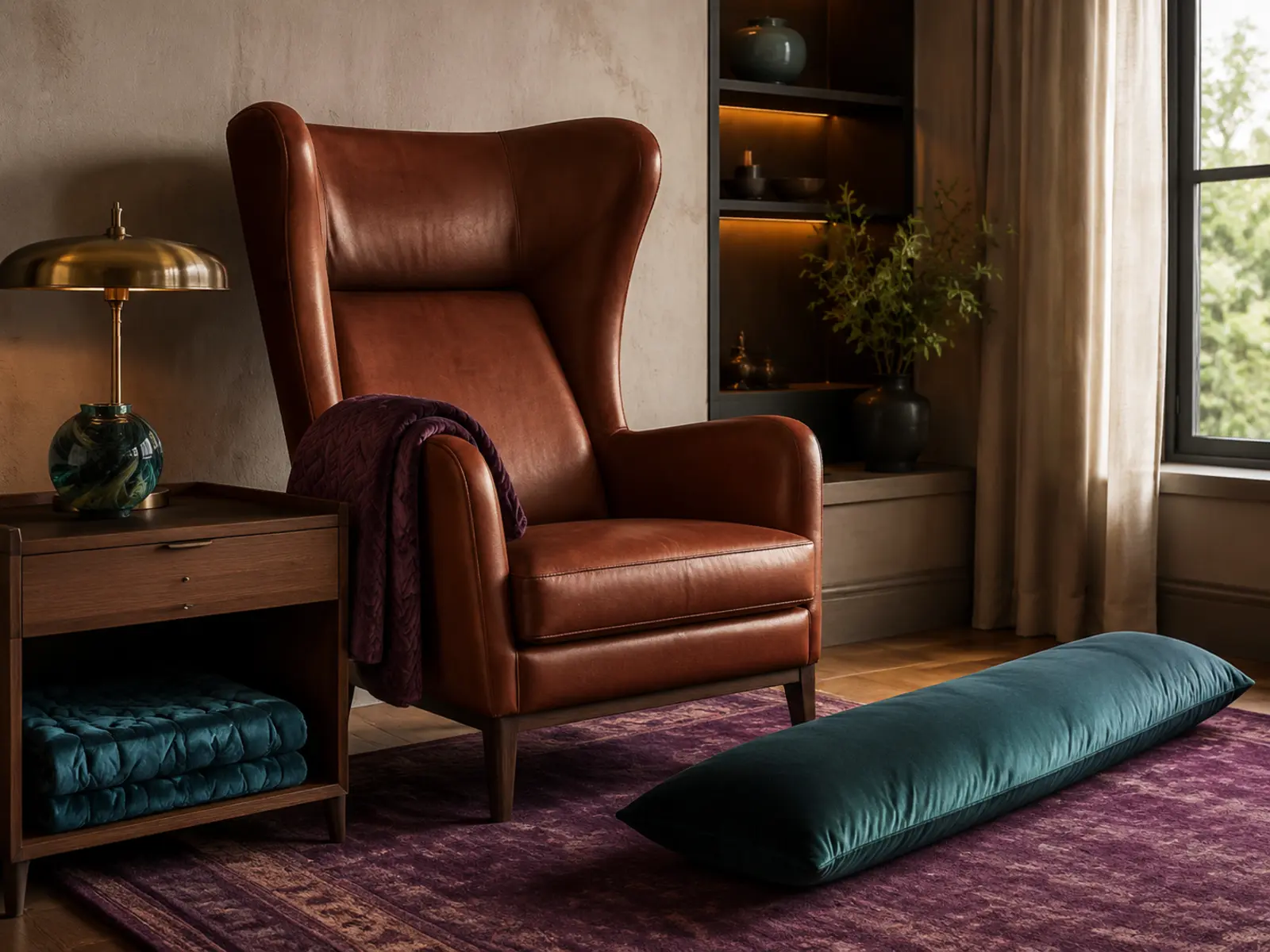
Choose pressure and support deliberately
Try a high-backed chair, body pillow, lap pad, or weighted throw that can be removed easily. Follow weight and health guidance for weighted products.
Why it helpsSome adults find firm support or deep pressure grounding; others feel trapped or overheated.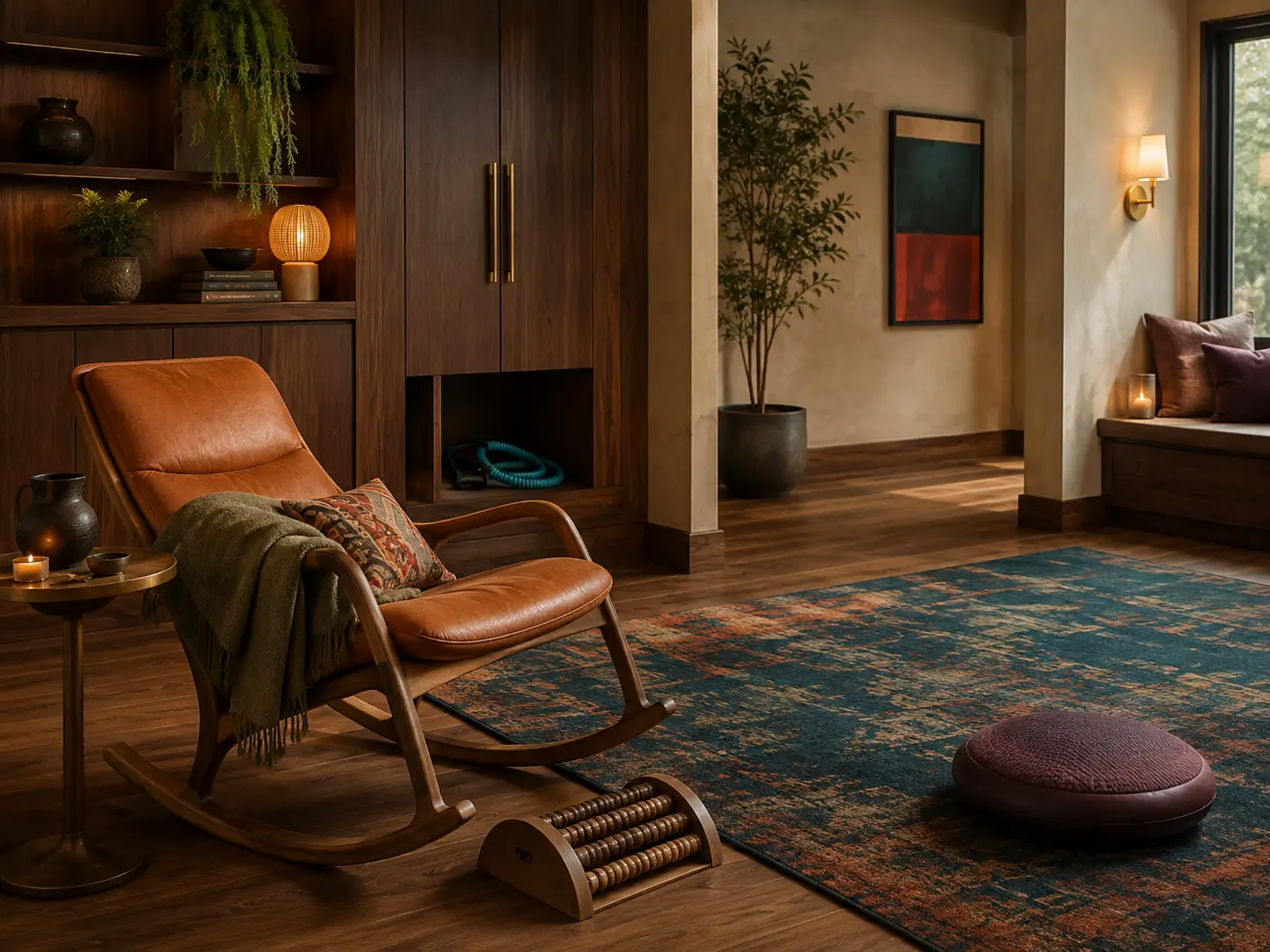
Include quiet movement
A rocking chair, foot roller, resistance band, compact balance cushion, or open floor space can provide movement without making the room resemble a gym.
Why it helpsSmall, repeatable movement may help with settling, concentration, or transition after work.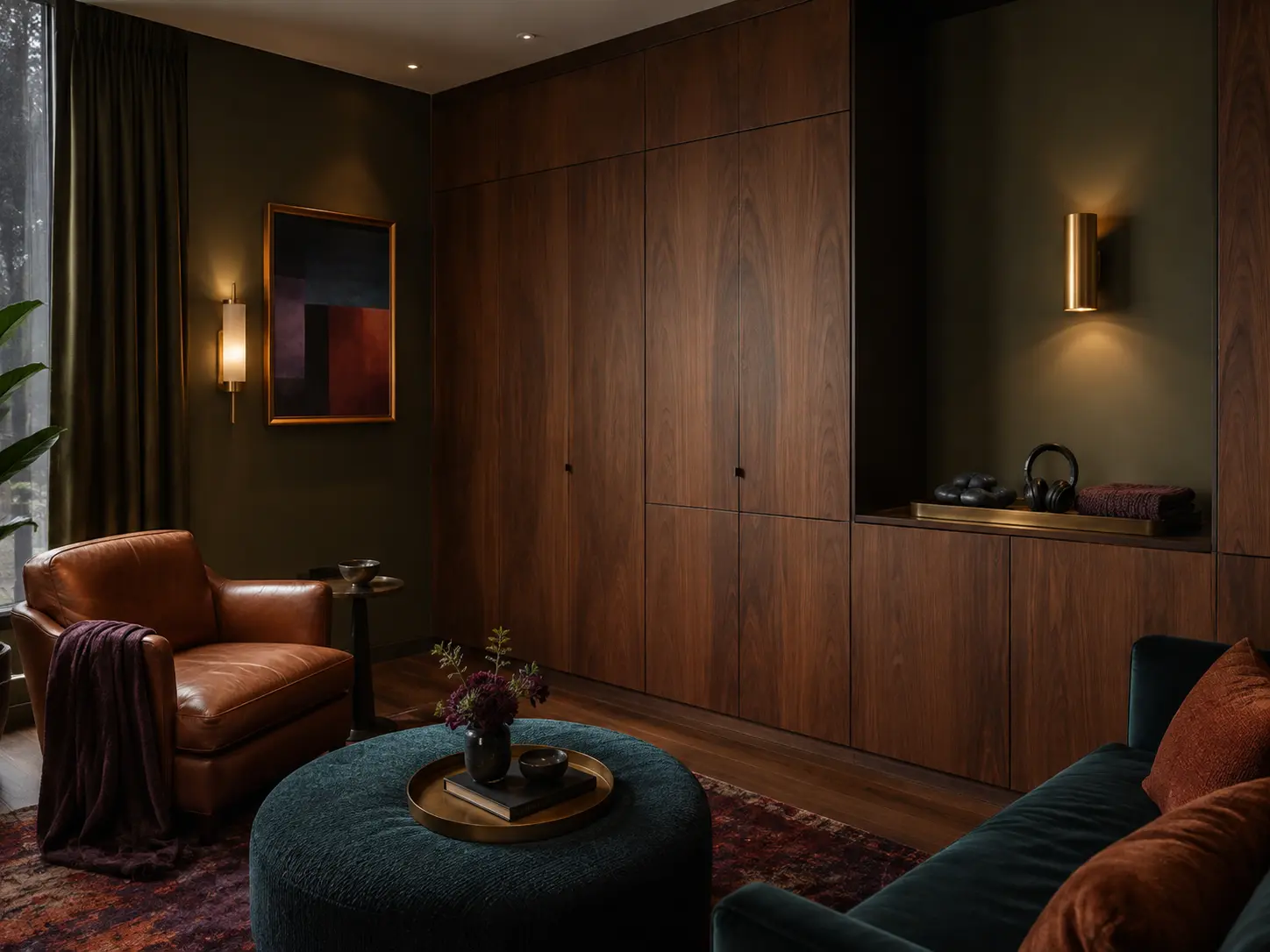
Reduce visual noise
Use closed storage for extras and leave only the current tools visible. Choose a consistent material palette rather than matching sets of colorful sensory products.
Why it helpsFewer visible decisions can make the room feel easier to enter and maintain.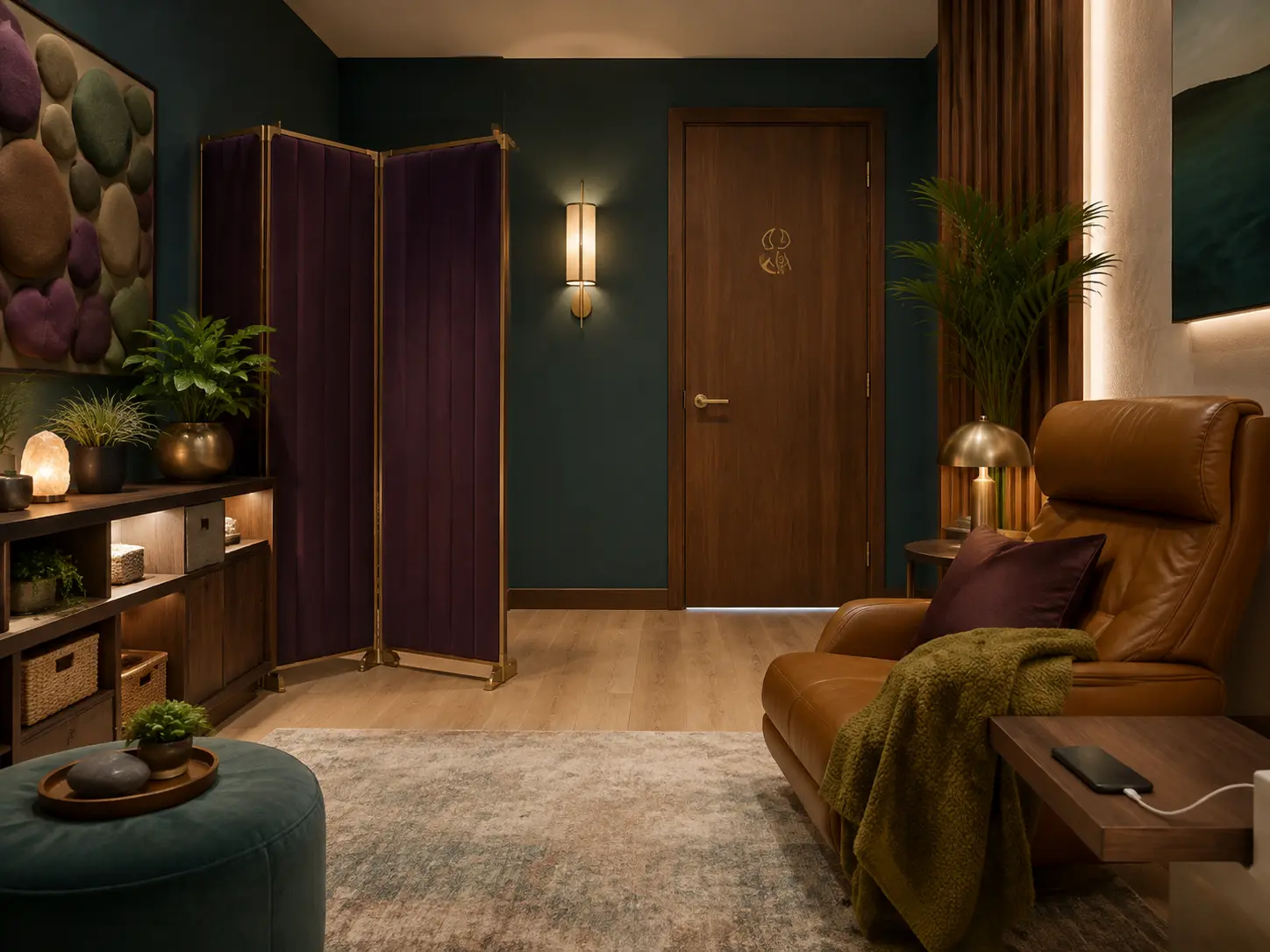
Protect privacy
Add a lock only when safe, otherwise use a clear household signal, door sign, or agreed quiet period. Keep charging and communication within reach.
Why it helpsA decompression space works better when uninterrupted time is respected rather than negotiated repeatedly.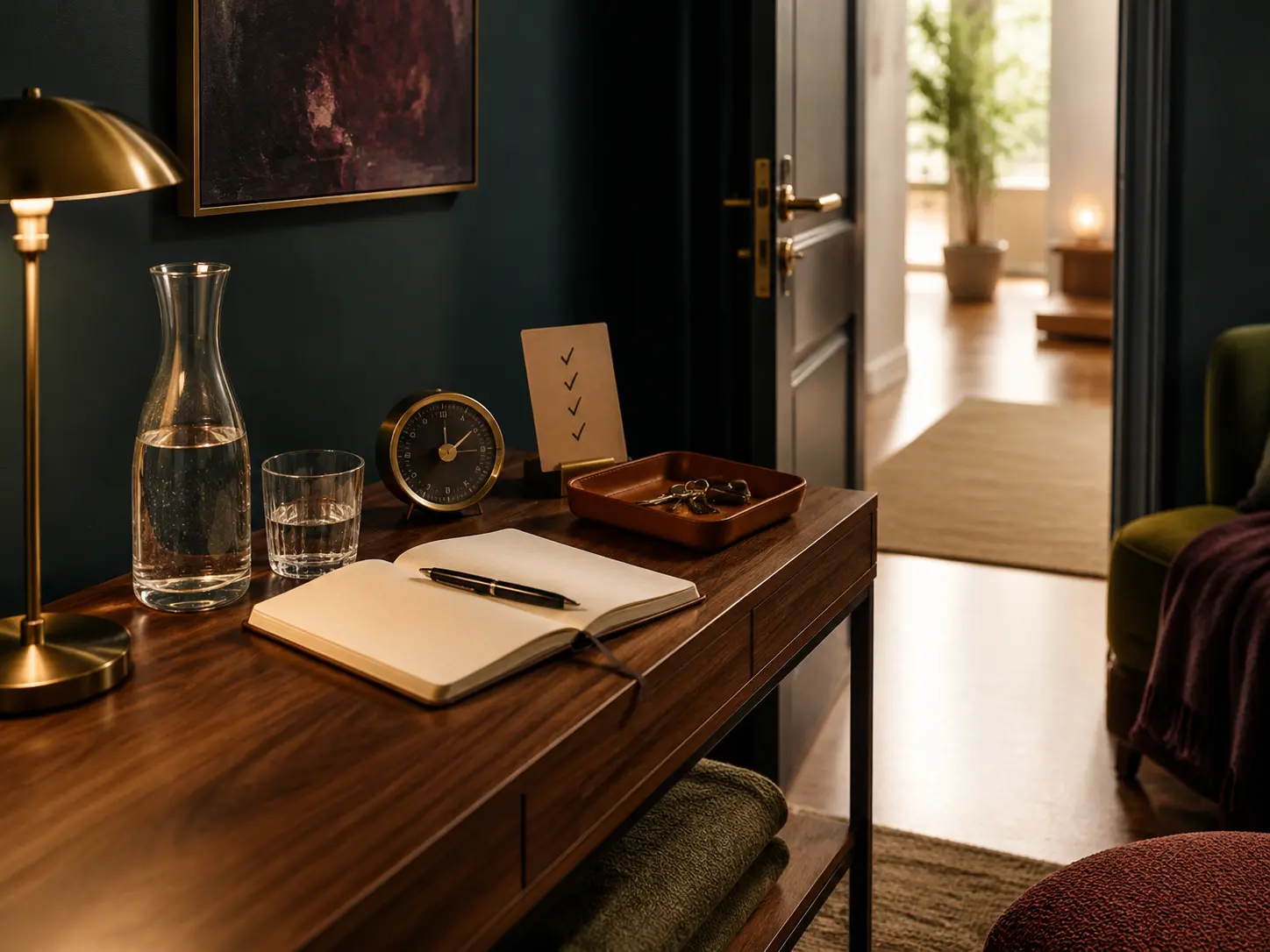
Create a return-to-day ritual
Keep water, a notebook, timer, or simple checklist nearby so leaving the room can be as gentle as entering it.
Why it helpsA predictable transition helps the space support daily life instead of becoming disconnected from it.The room plan
Comfort should be adjustable.
No sensory preference is universal. Build in choices - brighter or dimmer, still or active, open or enclosed - so the room can change with the person and the day.
- 01Identify the two situations when regulation is most difficult.
- 02Choose one support for light, sound, touch, and movement - then test.
- 03Keep every sensation optional and easy to stop.
- 04Use furnishings that support the body, not only the photograph.
- 05Review what actually gets used after two weeks and edit the rest.
Before purchasing equipment
Comfort is personal; equipment still needs limits.
- Discuss weighted products with a qualified clinician when breathing, circulation, temperature regulation, mobility, pregnancy, or other health factors may be relevant.
- Avoid candles, open flames, and unsecured heaters in a low-light room; use safer ambient-light alternatives.
- Keep exits, mobility paths, medication, communication devices, and emergency access clear.
- Anchor shelves and hanging equipment correctly and follow all manufacturer weight ratings.
- Use volume limits and take listening breaks when headphones or immersive audio are part of the room.
This design guide is educational and is not medical, therapeutic, or occupational-therapy advice. Sensory needs vary widely. Seek individualized guidance from a qualified professional when equipment, mobility, behavior, sleep, or safety needs require it.
Frequently asked
Practical answers before you begin
Is an adult sensory room only for autistic adults?
No. Adults may create one for sensory processing preferences, ADHD, anxiety, migraine recovery, burnout, or ordinary decompression. The room should respond to the person, not a label.
What if I do not have a spare room?
Use a corner with a supportive chair, adjustable lamp, lined curtain or screen, headphones, and one concealed basket of preferred tools.
Can the room double as a home office?
Yes, if work materials can be closed away and the lighting, sound, and seating shift clearly from work mode to recovery mode.
Should the room be completely silent?
Only if the user prefers silence. Some people regulate better with predictable sound such as music, a fan, brown noise, or nature audio.
Continue with purpose
Keep the room’s purpose clear.
Adult sensory rooms center individualized control over light, sound, movement, texture, pressure, privacy, and decompression. Wellness rooms center chosen rituals such as stretching, bathing, skin care, meditation, or quiet rest.
Use the wellness-room guide →CollectionThe Restorative HomeReturn to the hub →