
The Elevated Estate / Living Rooms
A living room with character, and room to live.
Build a living room around conversation, comfort, and the pieces you love—with a practical plan for layout, color, lighting, and scale.
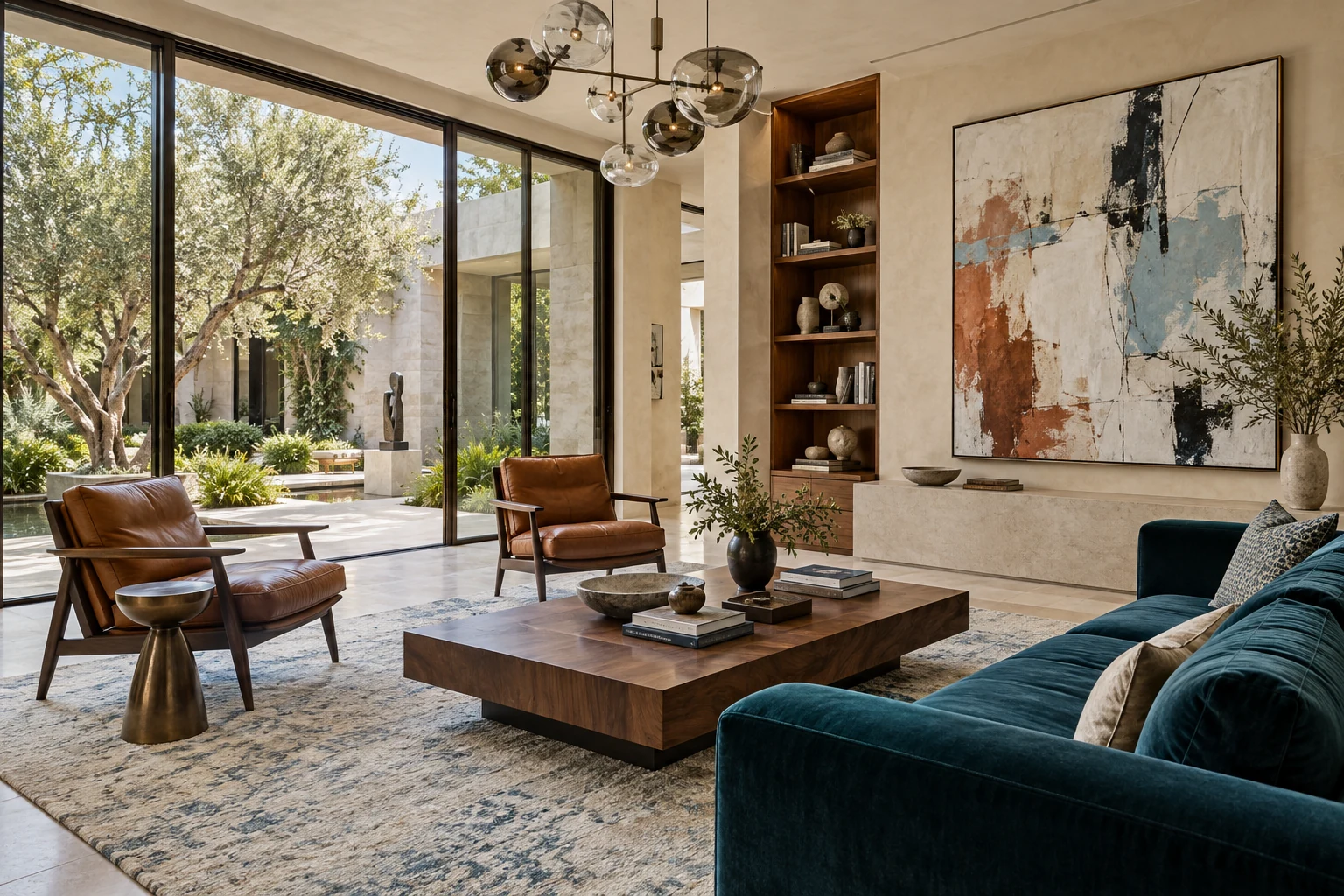
The most memorable living rooms have something personal at their center. That might be a color you return to, a chair with a history, or a view you never tire of. Begin with that point of connection, then make the room work around the way you spend time in it.
Imagery is AI-created design inspiration, not a photographed property or exact product imagery.
01 / Living Rooms
Arrange the room around a real evening.
Draw the room with its doors, windows, fireplace, outlets, and main walking routes. Place the largest seat first, then check what you see from it. A sofa aimed at a television can still sit within a conversation group; the other seats should have a reason to be there.
Leave enough space for the people who use the room to pass comfortably, including when chairs are occupied. A photograph cannot establish usable clearance. Test the layout at home, with the actual furniture dimensions and any mobility needs in mind.
Check the sofa and delivery route →02 / Living Rooms
Let one color give the room its character.
In this concept, teal seating sets the direction. Cognac-colored upholstery, wood grain, pale surfaces, and art give it warmth and variation. The colors relate without asking every object to match.
Choose your starting color from something you intend to keep. Compare a small group of fabric, rug, and paint samples alongside it. Look at them in the room’s own light rather than relying on separate online photographs.
Explore your palette and style →03 / Living Rooms
Connect the sofa, table, and rug.
Consider the seating group as a whole. A coffee table can be beautiful on its own yet feel too deep for the space, too distant from the chairs, or awkward beside the sofa’s arms. Shape matters as much as overall size.
Use the rug to make the furniture arrangement feel intentional. Compare its edges with the seating positions, door swings, and the boundaries of an open-plan room. The aim is a coherent group that works in use.
Plan the coffee table’s size and spacing →04 / Living Rooms
Give the room more than one lighting mood.
Start with what happens after sunset. Someone reading needs light where the book is; someone watching a screen may notice reflected lamps or a bright window. Position lighting around those activities rather than choosing all fixtures from one matching set.
A mix of room light, focused light, and a quieter accent can make the same space useful at different times. Check bulb and dimmer compatibility before selecting adjustable fittings, and use qualified help for electrical alterations.
Read the layered-lighting guide →05 / Living Rooms
Choose texture you will enjoy living with.
Soft upholstery, smooth wood, woven textiles, and a little metal bring contrast without requiring more objects. Give the most expressive material some space so its character can be appreciated.
Ask about the exact upholstery, cushion fill, removable covers, cleaning method, and repair options. If you share the room with children or pets, consider the everyday mess you actually manage. A material’s appearance alone does not tell you how it will wear.
Adapt the idea
Make it work for your home.
If the room is compact
Begin with fewer pieces and keep their depth in proportion to the room. A second large chair may contribute less than a clear route and a small reachable surface. Test alternatives on the floor plan before downsizing everything.
If you are keeping your sofa
Use it as the starting point. Reconsider the rug, chair angle, lighting, and table placement before replacing the largest purchase. A familiar sofa can feel different in a better arrangement.
If changes need to happen gradually
Fix the obstacle that affects daily use first: an awkward route, an unreachable table, or poor reading light. Choose one decorative addition after those basics work.
The considered purchase
A final check before you buy.
- Room dimensions, door swings, and occupied seating clearances are recorded.
- The complete delivery route and packaged furniture dimensions have been checked.
- Fabric and finish samples have been seen together in the room.
- Care instructions, warranty, delivery arrangements, and return conditions have been reviewed.
- Every new piece has a useful role and a confirmed place.