
The Elevated Estate / Living Rooms
The art of a layered living room.
Bring together deep color, warm wood, expressive art, and comfortable seating—without making the room feel crowded.
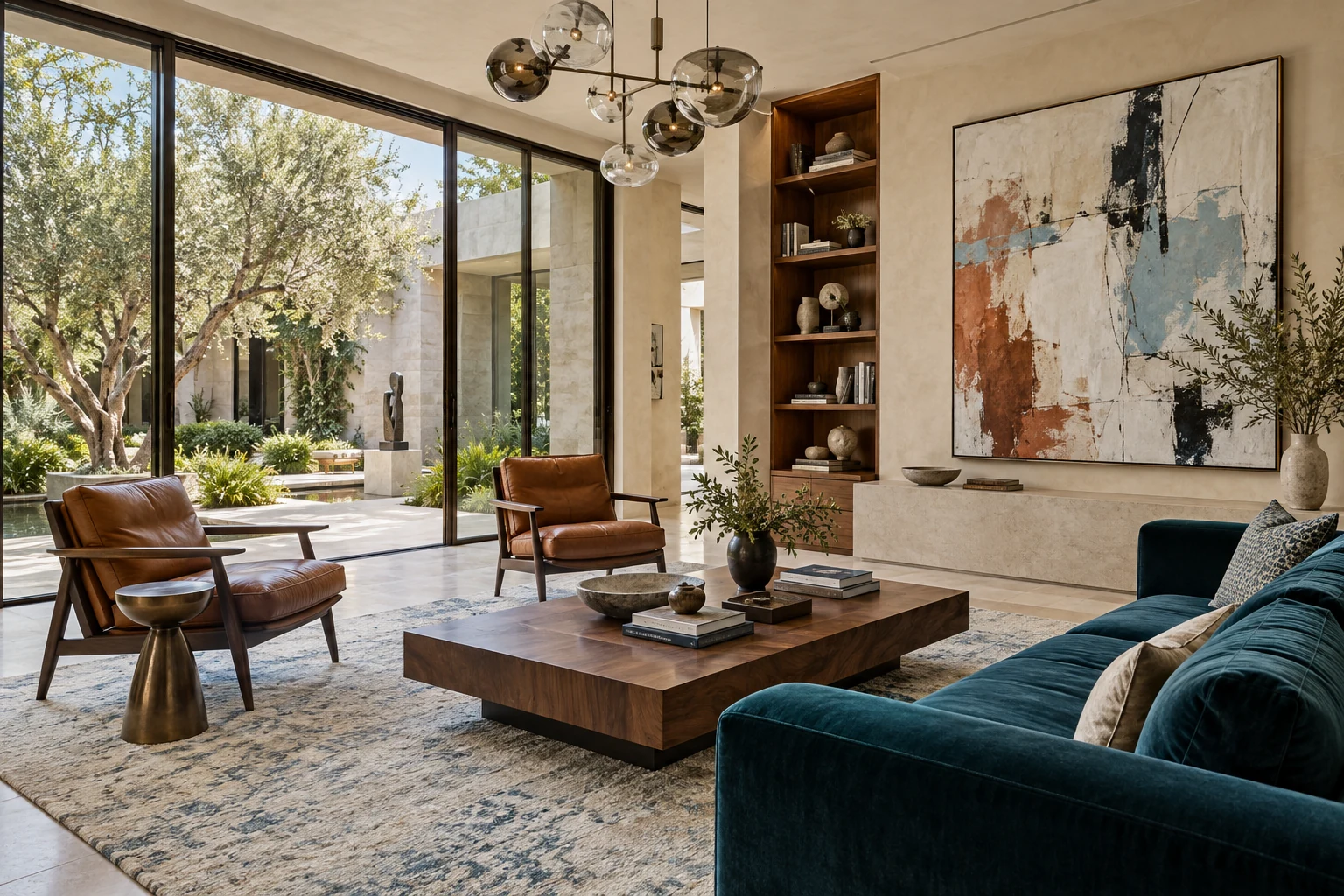
A layered room reveals itself gradually: the grain of a table, a color picked up from a painting, a chair turned toward the afternoon light. The starting point here is a teal sofa and a warm wood table. Use the relationships between the pieces as inspiration, then build around what belongs in your own home.
Imagery is AI-created design inspiration, not a photographed property or exact product imagery.
01 / Living Rooms
Give the room a clear starting point.
Choose the element you want to notice first: a richly colored sofa, a large artwork, or the view. Let nearby surfaces be quieter so your eye has somewhere to rest. A room with several interesting objects still needs a sense of order.
If your sofa is neutral, the starting point could be an existing rug or painting. Pull a supporting color from it rather than replacing furniture to recreate the picture.
02 / Living Rooms
Arrange a conversation, then protect the route.
Turn a chair slightly toward the sofa and notice how that changes the invitation to sit. A pair of chairs need not face perfectly forward. Arrange the group around comfortable conversation while keeping the daily path through the room clear.
Include table reach in the arrangement. A low sculptural table may look appealing but leave a particular seat without a useful surface. Test the room with people sitting in it before finalizing positions.
Plan table size and reach →03 / Living Rooms
Mix textures with a little restraint.
Try a small material palette: one soft upholstery, one visible wood grain, a woven textile, and a restrained metallic accent. This is a starting exercise, not a rule. Repeat a material where it helps the room feel connected.
Compare finishes in person when possible. Two woods can work together without matching, but their undertones and sheen may look very different under your lamps. Ask for the care information as well as the sample.
04 / Living Rooms
Let art and objects tell your story.
Start with artwork you enjoy looking at and give it enough visual space. Consider the whole wall, including the furniture beneath it, before choosing a frame or buying another piece.
On a coffee table, leave a useful clear area and group a few objects with different heights. Books you read, a bowl you use, or an object with a personal history can make the arrangement feel specific to you.
Plan an artwork grouping →05 / Living Rooms
Finish the room after sunset.
The last layer is the room at the time you actually use it. Look for a reading seat that needs better light, a lamp reflected in a screen, or an area that feels unnecessarily bright.
Give each lamp a purpose. A shaded light beside a chair and a quieter light across the room can create different choices through the evening. Follow fixture instructions and keep cords out of walking routes.
Explore the lighting layers →Adapt the idea
Make it work for your home.
A smaller living room
Keep one expressive anchor and fewer supporting pieces. Try a movable side table if a large coffee table interrupts the route.
A room full of existing furniture
Work on placement first. Move one occasional piece out temporarily, then judge whether the room needs another purchase or simply more breathing room.
A gradual refresh
Resolve an uncomfortable seat or awkward table before buying decorative objects. Add art and textiles after the arrangement works.
The considered purchase
A final check before you buy.
- Every seat has a useful role and somewhere reachable for a drink.
- Walking routes work when the room is occupied.
- Finish and fabric samples relate to the pieces you are keeping.
- The main artwork has been checked at its intended scale.
- The room works in evening light as well as daylight.