
The bulb is visible from the sofa
A sight-line problem
Move the lamp behind the seated eye line, lower or angle an adjustable head as instructed, or choose a shade and diffuser that conceal the source.
The soft source / Evening living rooms
Sit first, then judge the lamp from every normal seat. The shade, diffuser or lamp head should keep the bright source out of your direct view while still putting useful light where you need it. Before buying, move the lamp you already own, lower its brightness if the bulb and control are compatible, and test reflections on the television and glass after dark.
1. Glare is not one shopping problem
Do not start with lamp style. Start with the view from the sofa, the task, and the surface that catches the light.
A sight-line problem
Move the lamp behind the seated eye line, lower or angle an adjustable head as instructed, or choose a shade and diffuser that conceal the source.
A brightness or diffusion problem
Try a lower-lumen compatible bulb or a dimmer-approved combination before replacing the fixture.
A reflection problem
Move the lamp sideways or behind the reflecting plane; test the exact evening viewing positions before buying.
A task-light problem
Add or redirect a smaller pool of light toward the page instead of making every surface brighter.
2. The zero-dollar evening audit
Run this after dark with the room in its normal evening condition. It is a preference test, not a photometric measurement.
Use your normal posture—including the deepest sofa cushion—not a standing view from the doorway. Notice whether the bulb, LED module or intensely glowing shade is visible.
Hold a book several inches in front of your eyes and let its edge block only the bright source. If the rest of the room suddenly feels comfortable, source visibility or contrast is the likely issue. Keep paper and fabric away from the lamp.
With the lamp off and cool, try it slightly behind the sofa arm or farther from the closest seat. If the exact bulb, socket and control are dimmer-compatible, compare a lower setting. Never exceed the fixture’s marked limits.
Turn on the television and look at framed art from the seats used at night. A lamp can be comfortable to look toward and still create a distracting reflection.
Read a page, knit, talk or watch television as you normally would. The goal is not the darkest room; it is enough light without a source demanding attention.
3. The seated sight-line test
Sofa height, cushion compression, posture, lamp position and shade geometry all change the view. Measure the relationship, not a rule copied from another room.
If the bulb remains visible, adjust only within the lamp’s intended range. Otherwise change the lamp’s position or choose a different distribution. A taller lamp is not automatically better; distance and shade depth can change the sight line just as much.
4. Choose the light distribution
| Form | What it can do well | What to verify |
|---|---|---|
| Opaque or lined shade | Directs more light up and down while hiding the bulb from the side | The lower rim still has to cover the source from every normal seat |
| Translucent fabric shade | Adds a softer ambient glow and can reduce hard contrast | A pale shade can still become uncomfortably bright at high output |
| Opal globe or enclosed diffuser | Spreads light and removes a direct view of a bare bulb | The glowing surface itself may reflect in a screen or feel too bright nearby |
| Adjustable task floor lamp | Puts light close to reading, craft or music work | Aim the beam and conceal the source without shining into another seat |
| Uplight or torchiere | Uses the ceiling as a broad indirect surface | It depends on ceiling color, height and finish; it may not provide enough page light |
Brightness is measured in lumens, not watts. ENERGY STAR also notes that lower Kelvin values look warmer and that not every LED works well with every dimmer. Use the bulb, fixture and control manufacturers’ compatibility information rather than assuming a “dimmable” label makes every combination suitable. Brightness guidance · Color and dimmer guidance
5. Worked example / A reading end of the sofa
Imagine a 34-inch-deep sofa with an 18-inch compressed seat height. The primary reader’s seated eye is 43 inches from the floor. An adjustable floor lamp stands beside the arm: the light source is around 53 inches high, the nearest lower shade edge is 49 inches high, and the bulb is visible from the deep cushion.
The numbers explain the method; they are not a specification for another household. Recheck stability, clearances, heat, cord condition and the manufacturer’s limits after every move.
The creative move
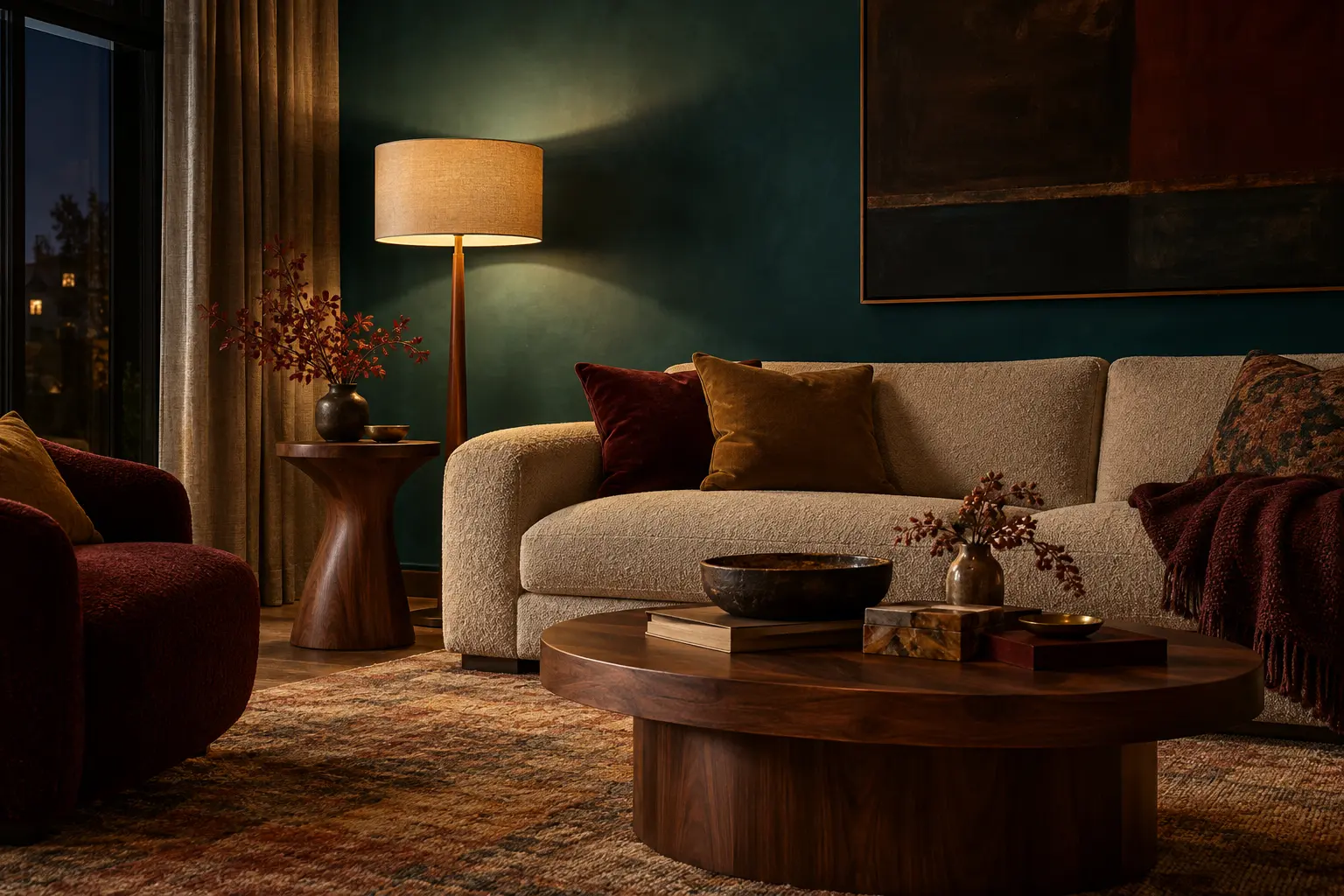
Place the shaded lamp so its soft spill grazes one tactile surface—a deep-color wall, linen curtain or walnut side table—while the bulb remains hidden. The reflected light gives the room depth without adding a second decorative object. Test the finish after dark: glossy paint and glass may create a new hot spot, while very dark matte surfaces return less light.
6. Two specification conversations
These official listings illustrate two different approaches. They are not ranked recommendations and no performance is claimed in your room.
Adjustable shaded light
The current U.S. specification lists a 55.25-to-72-inch adjustable height, 21-inch width, 9-by-15-inch base, 21-by-21-by-12.5-inch linen shade, E26 dimmer socket and 15-watt LED A19 limit. Those details let a shopper test height range, shade coverage, base fit and bulb compatibility before ordering.
Review the official Alda specificationThe page showed finish options, while the individual variant details said call for availability with expected shipping December 10, 2026 when checked October 1. Confirm the selected variant, price, lead time and return terms.
Enclosed diffused light
Flos describes an acid-etched opaline-glass diffuser and an electronic cord dimmer with 0-to-100-percent adjustment. Its professional specification identifies an indoor dry-location floor lamp and lists the cord length and compatible lamp information. The useful question is whether a glowing globe suits the viewing distance and screen reflections—not whether diffusion makes glare impossible.
Review the official Glo-Ball specificationConfirm the current U.S. lamp, bulb, control, replacement-part, delivery and return details before ordering. Glass weight and the room’s traffic pattern matter.
Ordinary non-affiliate links; no sponsorship, brand relationship, installation, hands-on test or guaranteed comfort is claimed. Product and public guidance checked October 1, 2026. Specifications, availability and prices can change.
When this advice does not apply
Do not place a base where it narrows a required route or a cord where feet, wheels, children or pets can pull it. Use the lamp only in the location and with the bulb, wattage, controls, clearances and assembly described by its manufacturer. “Dry location” is not approval for a bathroom, covered patio or damp basement.
Stop using a lamp with a damaged plug, frayed cord, loose socket, unstable base, unusual heat, odor, buzzing or repeated flicker. Dimming compatibility problems can require a different bulb, control or qualified electrical assessment—not a decorative workaround.
People differ in visual comfort, tasks and sensitivity. Include the actual users in the nighttime test. If eye discomfort, headaches or changes in vision persist beyond one obvious bright source, a room edit is not medical care.
Before buying
Primary and manufacturer sources checked October 1, 2026. The glare audit, four-number sight-line note and worked room are original editorial planning methods, not lighting-engineering calculations or product tests.
Read our editorial standards · Relevant brand partnership inquiries