Brentwood · CaliforniaPractical tools for a more considered home
The Elevated EstateContact
Menu
The Elevated EstateDesign Tools

The Room Edit · Practical Design Guide

12 things making your room look cheaper than it is.

The room probably does not need more décor. It may need better scale, softer light, fewer distractions, and a clearer sense of what matters first.

See all 12 fixes
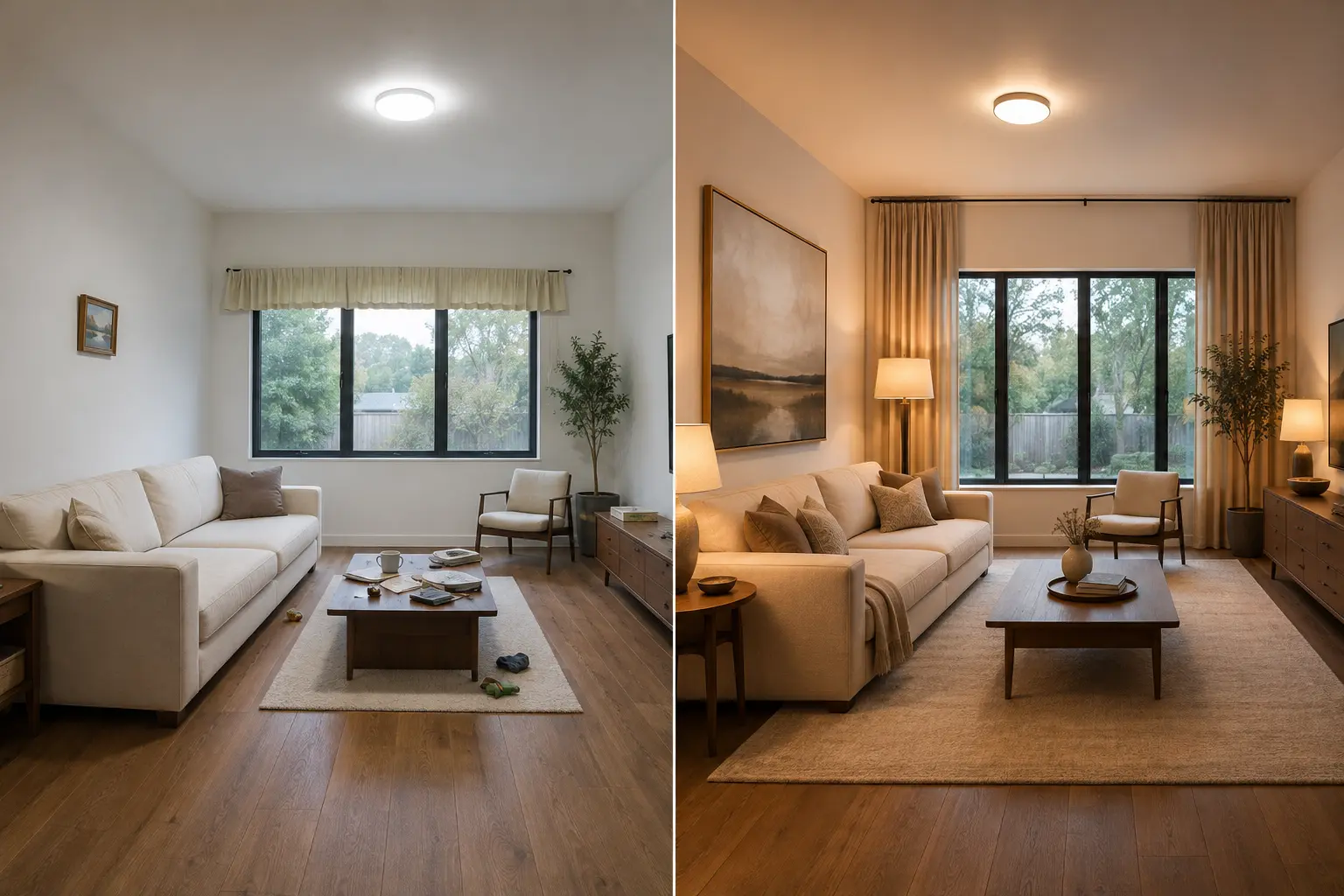
The same living room before and after correcting rug scale, curtain height, lighting, art size, and clutter
Before: undersized rug, low window treatment, weak art scale, cool overhead light, and visual clutter.After: anchored furniture, full-height curtains, layered warm light, correctly scaled art, and intentional styling.

The reassuring truth

Expensive-looking is rarely about price alone.

A room often feels unfinished because its largest decisions are out of proportion - not because its furniture cost too little. An undersized rug, weak lighting, or art floating too high can quietly diminish everything around it.

Work from the room’s foundations toward its finishing details. You may discover that the most effective improvement is moving, removing, or regrouping what you already own.

Diagnose before you decorate

The 12 quiet offenders - and the better move.

01

A rug that is too small

Why it weakens the room
A floating rug breaks the room into little islands and makes even beautiful furniture feel disconnected.
The elevated fix
Choose a rug large enough for at least the front legs of the main seating to rest on it. In a dining room, chairs should remain on the rug when pulled out.
Try this first
Before buying, mark the proposed size on the floor with painter’s tape. The room usually needs a larger rug than it first appears.
02

Curtains hung low and narrow

Why it weakens the room
A rod placed directly above the window emphasizes the window’s limits instead of the room’s height.
The elevated fix
Mount the rod higher and extend it beyond the frame so open panels reveal most of the glass. Use enough fabric to look full when closed.
Try this first
Move the rod before replacing the curtains. Better placement can transform panels you already own.
03

One harsh ceiling light

Why it weakens the room
Flat overhead light removes depth, creates hard shadows, and makes a room feel more functional than inviting.
The elevated fix
Layer ambient, task, and accent light at different heights. Warm, consistent bulb color creates a calmer and more intentional atmosphere.
Try this first
Add one table or floor lamp to the darkest corner and replace mismatched bulbs with the same warm color temperature.
04

Furniture pushed against every wall

Why it weakens the room
A perimeter of furniture can leave an awkward empty center and make conversation feel distant.
The elevated fix
Pull seating inward where space allows. Let the arrangement relate to a rug, coffee table, fireplace, or view rather than only to the walls.
Try this first
Move the sofa or chairs forward a few inches. Even a small gap can make the layout feel deliberate.
05

Art that is undersized or hung too high

Why it weakens the room
Small artwork can look stranded above substantial furniture, while high placement disconnects it from the room.
The elevated fix
Choose art - or a grouped arrangement - that visually relates to the furniture below it. Keep the composition near comfortable eye level.
Try this first
Lower the piece and test a wider paper template before purchasing anything larger.
06

Too many tiny decorative objects

Why it weakens the room
A collection of equally small accents creates visual chatter and gives nothing enough presence to become a focal point.
The elevated fix
Edit first, then group a few objects with different heights, shapes, and breathing room. One larger piece often does more than several small ones.
Try this first
Remove half the accessories for one week. Return only what adds meaning, shape, texture, or useful function.
07

Matching furniture sets

Why it weakens the room
Perfectly matched pieces can make a room feel purchased all at once rather than collected with judgment and personality.
The elevated fix
Keep a shared thread - color, wood tone, line, or material - while varying age, shape, or finish.
Try this first
Break up the set with a different side table, lamp, textile, or hardware finish instead of replacing every major piece.
08

No clear color hierarchy

Why it weakens the room
When every color has equal importance, the eye has nowhere to rest and the room can feel accidental.
The elevated fix
Let one foundational tone lead, use a secondary color to create depth, and repeat a smaller accent with restraint.
Try this first
Photograph the room, identify the least connected color, and remove one or two items carrying it.
09

Ignoring scale and visual weight

Why it weakens the room
A delicate lamp on a massive console - or a tiny coffee table inside a large seating group - makes the proportions feel unresolved.
The elevated fix
Relate each piece to what surrounds it. Balance substantial furniture with lighting, art, rugs, and tables that have enough presence.
Try this first
Move the smallest misplaced item out of the room and borrow a larger piece from elsewhere to test the difference.
10

Cheap-looking shine everywhere

Why it weakens the room
Too many glossy faux finishes reflect light in the same way, revealing imitation texture and flattening the room.
The elevated fix
Mix sheen levels and favor finishes with visual depth: linen, wood grain, aged metal, ceramic, stone, and softly reflective glass.
Try this first
Replace one shiny accessory cluster with a textured bowl, book, woven tray, or natural branch.
11

Visible clutter without containment

Why it weakens the room
Everyday objects are not the problem; the absence of a place for them is. Loose cords, mail, remotes, and small necessities interrupt the room.
The elevated fix
Give recurring items an attractive, reachable home. Use trays, closed baskets, drawers, cord control, and a simple end-of-day reset.
Try this first
Choose the single surface that collects the most clutter and solve only that zone today.
12

A room with no personal evidence

Why it weakens the room
A perfectly coordinated room can still feel inexpensive when it resembles a generic display and says nothing about the people living there.
The elevated fix
Add a small number of meaningful elements: original art, a framed memory, books you read, an inherited object, or something gathered while traveling.
Try this first
Replace one generic filler object with something that has a real story.

Fix the room in the right order

Foundations before finishing touches.

When several things feel wrong, do not solve them all at once. Correct the room’s structure first, then refine its personality.

  1. 01Layout & scaleFurniture placement, walking paths, rug size
  2. 02Light & windowsBulbs, lamps, curtain height and fullness
  3. 03Color & materialsPalette hierarchy, texture, finish balance
  4. 04Art & stylingProportion, clutter, meaningful final details

Complimentary Room Assessment

Not sure which problem is costing your room the most?

Score the nine details designers notice first. Your personalized report identifies the three changes most likely to elevate your room and ranks them by visual impact, likely cost, and difficulty.

Assess my room Takes about three minutes · No signup required

Frequently asked questions

Making a room look more considered.

What makes a room look cheap?

The most common causes are poor scale, thin window treatments, one-dimensional lighting, undersized art or rugs, visible clutter, matching sets, and too many small accessories. These are usually arrangement and proportion problems - not proof that the room needs expensive furniture.

How can I make my room look expensive without spending much?

Edit clutter, improve furniture placement, hang curtains higher and wider, use consistent warm bulbs, restyle accessories in fewer groups, and repeat a restrained palette. Correcting what is already present often has more impact than adding décor.

What should I fix first in a room?

Begin with the largest visual foundations: layout, rug scale, curtains, lighting, and art. Small accessories should come later because they cannot correct the room’s proportions.

Do neutral colors automatically make a room look expensive?

No. A neutral room still needs contrast, texture, shape, and varied materials. Color can look polished too when it follows a clear hierarchy and repeats intentionally.

Can inexpensive furniture still look elevated?

Yes. Good proportions, thoughtful placement, restrained styling, flattering light, and a cohesive material story can make affordable pieces feel far more considered.

Continue your room plan

Diagnose the room. Then make every choice count.

Assess your room →Discover your style →Measure curtains correctly →Explore all design tools →