
Float
Ends just above the floor. Crisp, practical, and forgiving on floors that are not perfectly level.
The Window Edit · Practical Design Guide
Exact width, graceful length, and thoughtful placement matter more than the price of the fabric. Use this guide to plan each measurement before you order.
Direct answer
Measure the outside width of the window frame, add 6 to 12 inches on each side for rod extension, and multiply that rod width by 1.5 to 2.5 for fullness. Divide the required fabric width by one panel’s listed flat width and round up. For length, measure from the exact hanging point on the installed rod or track to the floor, then adjust for a float, kiss, break, or puddle.
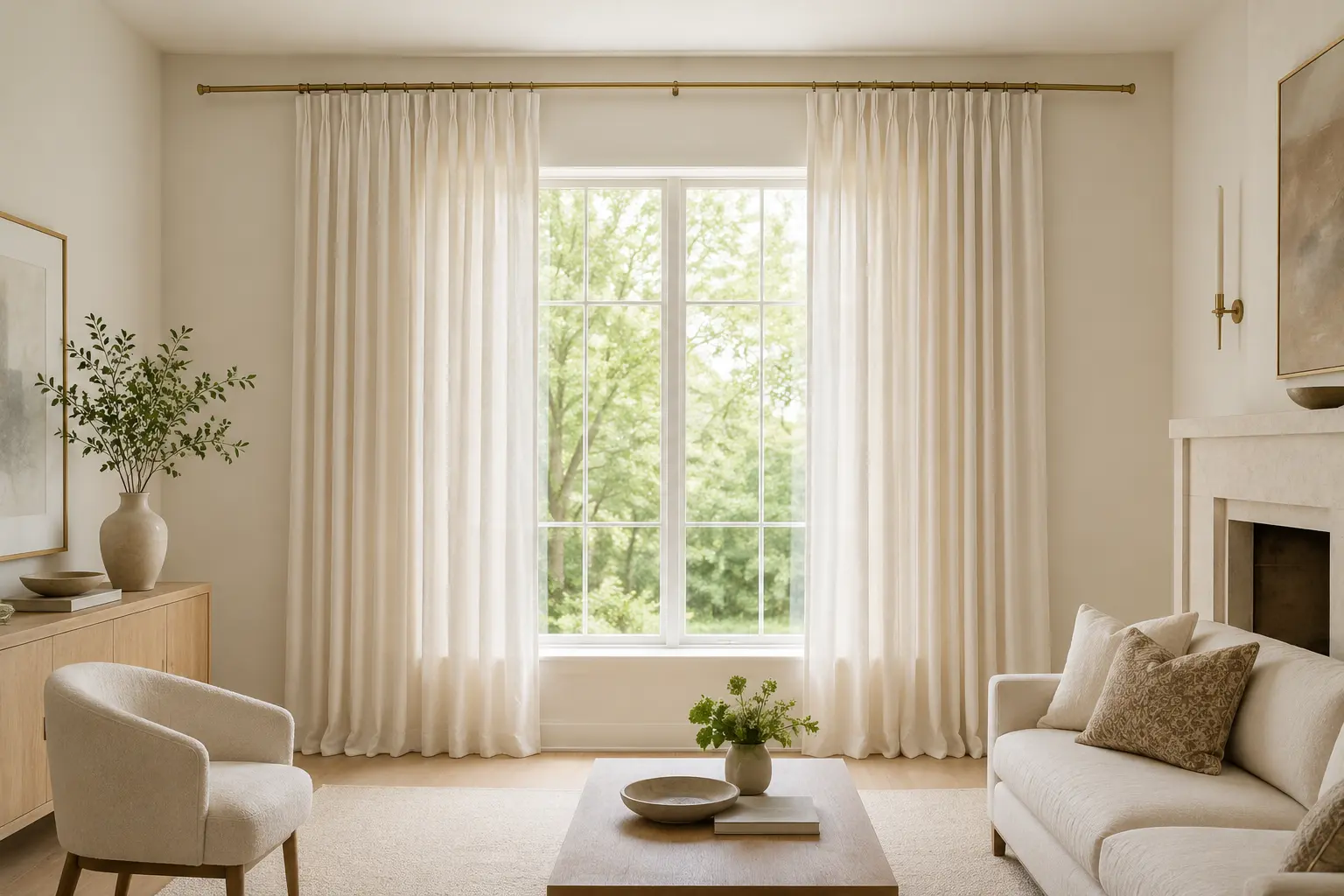
Original measurement diagram
Use the frame as your starting reference, but plan the finished installation from the rod and hanging point.
Before you begin
The most common mistake is measuring the window and buying curtains of the same width. That produces panels that look flat when closed and expose too much glass when open.
Instead, plan the rod first. Its usable width determines how much fabric you need, while its mounting height determines the finished curtain length.
Your five-minute measuring kit
The complete formula
Measure from the outside edge of the left trim to the outside edge of the right trim. Record the number in inches. If the window has no trim, measure the full opening.
Do not include handles, finials, or decorative rod ends.Add approximately 6 to 12 inches on each side when wall space allows. More extension exposes more glass when the curtains are open and can make the window feel broader.
Multiply the usable rod width by the fullness that suits your fabric and desired look. Sheer or lightweight fabric can carry more fullness; bulky fabric may need less.
Divide the total fabric width required by the finished width of one panel, then round up to the next whole panel - or the next even number when you want equal panels on both sides.
Choose the finish before measuring down
Measure from the exact point where the curtain will hang on the rod or track - not automatically from the top of the rod. Rings, clips, pockets, and hooks all change the starting point.
Worked example
Assume a 60-inch-wide window, 8 inches of rod extension on each side, 2× fullness, and panels that are 50 inches wide.
60 + 8 + 8 = 76 inchesplanned rod width
76 × 2 = 152 inchestotal fabric width needed
152 ÷ 50 = 3.04round up to four panels for an even pair
Result: four 50-inch panels create 200 inches of fabric across a 76-inch rod - about 2.6× fullness. If that feels fuller than desired, look for wider two-panel sets or custom widths rather than rounding down to skimpy coverage.
The expensive-looking difference
When the standard formula changes
Use the available wall space near corners, built-ins, or adjacent windows. A narrower extension may be necessary, so confirm the open panel stack will not cover too much glass.
Measure length at the left, center, and right. Use the shortest safe finished length for a float, or wait to hem until the hardware is installed.
Radiators, baseboard heaters, vents, furniture, and door swings can affect safe length and placement. Follow appliance, fabric, and hardware clearances.
Ceiling tracks, motorized systems, return rods, and custom headings have different hanging points and stack-back needs. Use the manufacturer’s installation dimensions.
Save before shopping
Use your browser’s print option to save this card
Skip the arithmetic
The complimentary calculator recommends rod width, mounting height, curtain length, fullness, panel width, and quantity - plus personalized designer notes.
Open the curtain calculator →How this guide was prepared
This guide uses standard curtain-planning calculations, visible assumptions, and editorial design judgment. It does not evaluate or claim hands-on testing of specific curtains, rods, tracks, or mounting hardware. Product dimensions and installation requirements vary, so confirm the manufacturer’s specifications and your wall conditions before ordering or installing.
Read our editorial standards →Frequently asked questions
As a practical starting point, the combined finished width of the curtain panels should be about 1.5 to 2.5 times the width of the space the fabric will cover. Two times fullness creates a reliably tailored, generous look for many fabrics.
Extending the rod roughly 6 to 12 inches beyond the window frame on each side often lets the open curtains sit mostly outside the glass. Use the room, available wall space, finials, and panel stack-back to refine the number.
Hang the rod above the window trim rather than directly on it. A position about 4 to 8 inches above the frame works in many rooms; mounting closer to the ceiling can visually lengthen the wall when proportions allow.
For a polished everyday installation, choose a finished length that just kisses the floor or floats about half an inch above it. A deliberate 1- to 3-inch break feels relaxed; a larger puddle is decorative but requires more upkeep.
Measure the window first to plan rod placement. Once the rod width is established, use the rod's usable width - not including decorative finials - to calculate the total fabric width and panel quantity.
Continue your room plan