
The useful kitchen / A space budget
Keep the routine.
Clear the work.
By Christina Hines ·
How Do I Keep Kitchen Counters Clear Without Making Breakfast Harder?
Keep the appliances you use often or cannot comfortably move in suitable operating positions. Clear packaging, duplicates and unrelated objects first, then protect one continuous preparation area. Store an appliance only when getting it out and putting it away is realistic for the person using it.
I would start by making breakfast, not by buying matching containers. The useful test is whether the counter works better after the edit.
See the worked counter budget ↓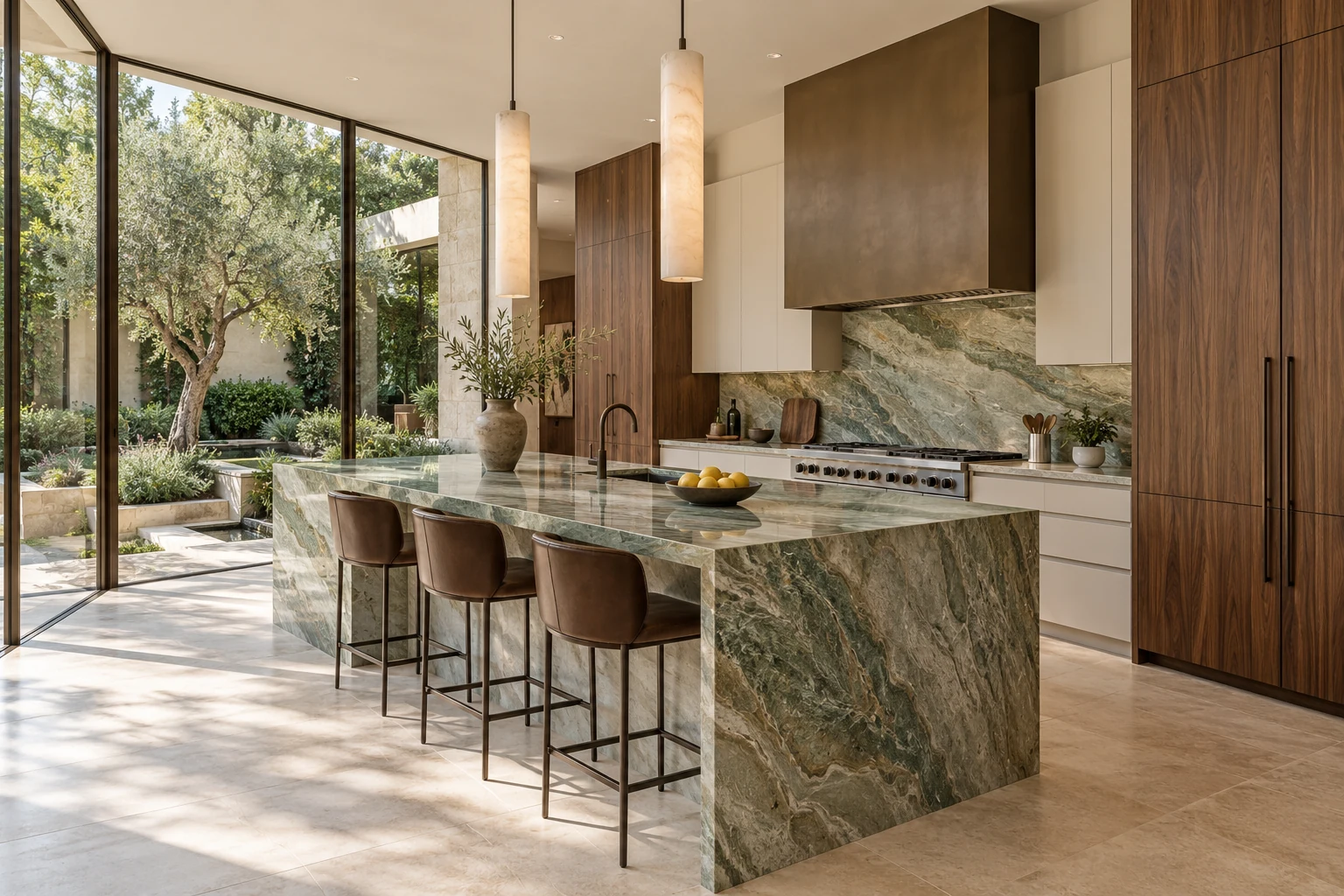
The problem is often fragmented space.
A counter can have several empty patches and still lack anywhere to put a board, ingredients and a plate together. A row of canisters, a mail pile and an appliance used once a month can divide the useful surface into scraps. Moving everything into cupboards may reverse the appearance without improving the routine.
Separate three questions: what needs to stay within easy reach, what needs space while operating, and what simply landed here? A heavy mixer may deserve a permanent position. Six decorative storage jars may not. Frequency matters, but lifting, reach and the difficulty of resetting the space matter too.
Try three ordinary mornings before spending.
- Watch the sequence. Record what you fetch, what you move aside, where you prepare food and where dishes wait. Include the person who usually clears up.
- Remove only the nonessential obstacles. Relocate mail, spare utensils and duplicate supplies. Put dry breakfast supplies in an existing drawer or suitable container nearby. Keep food in appropriate packaging or storage; visual uniformity is optional.
- Test one appliance move. Choose something light enough to handle comfortably. Try its proposed storage position, then repeat the complete retrieve-use-clean-return routine. If you leave it out because returning it is difficult, change the storage plan.
Do not turn the sink, hob or a walking route into overflow storage to make the photograph look calmer. Keep the surface used for actual food preparation clean and suitable for that purpose.
Worked example / Hypothetical household
A 72-inch run.
One useful middle.
This example uses a measured 72-by-24-inch clear counter run, excluding the sink and hob. The household already has a separate suitable appliance operating position. The illustration allocates ordinary storage and preparation space, not appliance ventilation clearance.
What changed?
Spend: $0. No new organizer, cabinet or appliance.
Test: place the household’s 18-by-12-inch board and actual breakfast dishes within the proposed space. Check reach, depth, door openings and cleanup.
Trade-off: occasional items take an extra retrieval step. If that is difficult, keep the useful item out and reduce decorative storage instead.
Give the counter a reversible “opening scene.”
My styling suggestion is a repeatable two-state arrangement: ready to work and reset after use. Keep one small group of dry supplies together, leave the preparation area genuinely open, and let a favorite existing bowl or the stone itself provide the character.
For the example above, the bowl belongs at the supply end, not in the middle of the board’s future position. Photograph the reset once as a household reference. Do not mark the counter with permanent lines or add a tray simply to fill the cleared space.
A tray can group small non-powered items when it makes handling easier. It should not automatically become a base for hot or powered appliances. Check the exact appliance’s instructions and the suitability of its supporting surface.
What stays out?
| Your observation | First choice | The condition |
|---|---|---|
| Daily and awkward to lift | Keep it in a suitable operating position | Clear the supplies around it before moving the machine. |
| Occasional and comfortable to carry | Test nearby accessible storage | Include retrieval, setup, cooling and return in the trial. |
| Daily but easy to move | Compare both arrangements for three mornings | A clear photograph is not worth a frustrating daily routine. |
| Decorative or unrelated to cooking | Move it out of the working area first | Keep a personal accent only where it does not consume needed space. |
| Cannot meet the manual’s location requirements | Stop using that proposed position | A cabinet door left open is not proof that an enclosure is suitable. |
Storage space is not automatically operating space.
Use the manual for the exact appliance, including its surface, electrical, clearance and ventilation requirements. For example, GE Appliances’ guidance for its 2- and 4-slice toaster ovens calls for a level surface, room for steam to escape and four inches of clearance on all sides. That is a product-family example, not a clearance rule for every oven, kettle or coffee machine.
Measure more than the body: a lid may lift, a reservoir may come out, a door may open forward and a crumb tray needs a removal path. Do not close a cabinet around an operating appliance unless its instructions explicitly permit that installation. Do not reroute cords through cabinet walls or improvise an electrical setup to achieve a tidy view.
Cleaning also needs space and time. KitchenAid’s toaster cleaning guidance says to unplug and let the toaster cool before cleaning, and notes that the crumb tray is hot immediately after a cycle. Follow your model’s instructions before handling, cleaning or storing it. A warm appliance does not belong in a rushed “everything away” routine.
When the plan should change
If someone has limited strength, reach or balance, keeping an appliance visible can be the more useful choice. Do not turn a daily task into repeated lifting from a low cupboard. For a shared kitchen, reserve accessible positions for the people who actually use them, rather than assigning space by who owns the appliance.
If the counter is genuinely too small for the required tasks, decluttering cannot manufacture depth, safe power or ventilation. Reduce simultaneous activities, review whether an existing nearby surface is suitable, or seek a qualified layout solution. A narrow cart is not an automatic fix if it blocks movement or cannot safely support the intended use.
Only buy after the trial identifies a missing function.
No new product is required for this reset. If supplies still scatter, measure an existing drawer before considering a divider. If an appliance is inaccessible, investigate a properly specified storage solution for its weight, dimensions and the user’s needs. Do not buy a smaller replacement solely because it photographs neatly.
- Which task needs one continuous surface?
- Which item is difficult to lift or retrieve?
- What must open, vent, drain, cool or be cleaned?
- Where do temporary items go after use?
- Can everyone repeat the reset without extra strain?
Continue with the kitchen and dining planning guide. If drinks need their own location, use the coffee-bar guide alongside the appliance checks above. Keep the measurements in the free Room Measurement + Shopping Notes.
Sources & editorial notes
Primary guidance checked October 24, 2026. The three-morning trial, space budget and styling method are original editorial suggestions, not a tested kitchen installation. No products were supplied and this feature contains no affiliate shopping links.