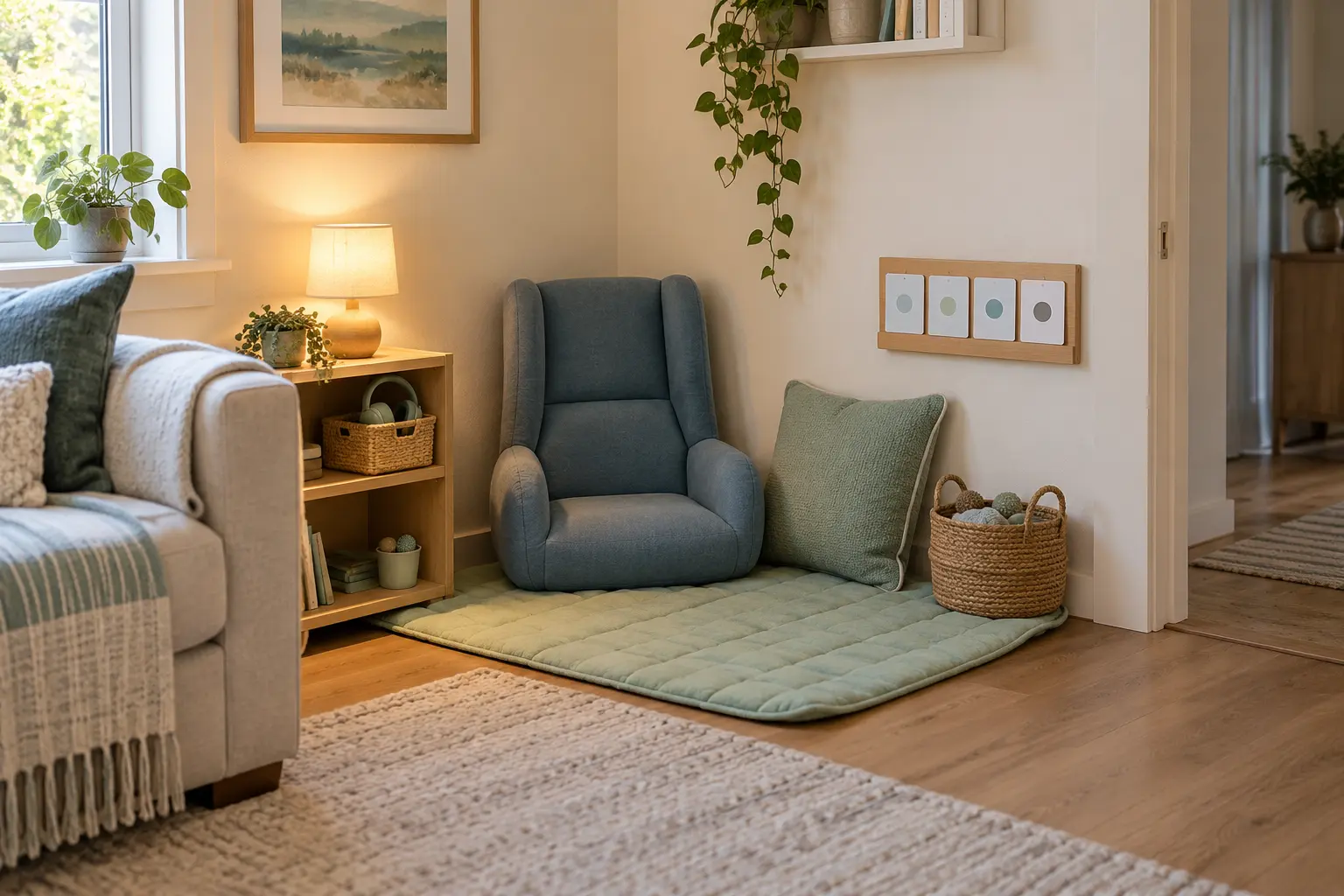
Plan before purchasing
A corner can be useful when it offers control, not pressure.
A dedicated room is not required. One carefully planned corner can provide a predictable place for quiet, supportive seating, lower light, headphones, a movement break, or a way to communicate what is needed. Begin with observed preferences, keep each option voluntary, and make leaving the space as easy as entering it.
A three-step room plan
Make one clear decision at a time.
Each illustration shows the exact step beside it. Use the ideas as a starting point, then adapt the layout to the person, room, supervision needs, and activities that matter in your home.
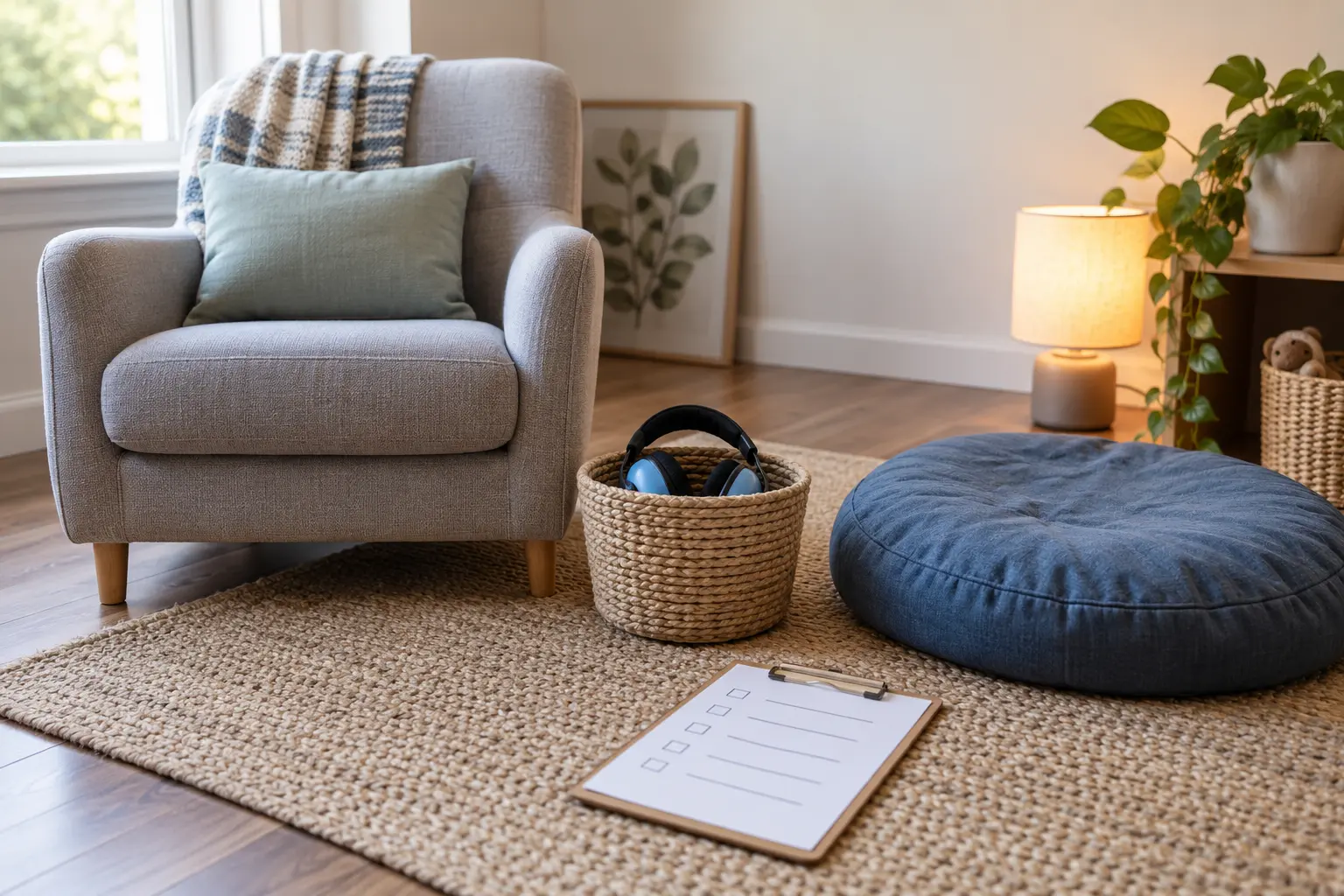
Observe first and choose one purpose
Notice what the child already chooses when they want less input, more movement, firmer support, or a break. Start with the clearest pattern instead of buying a complete kit.
- Observe across more than one day and more than one setting.
- Ask the child directly when they can communicate a preference.
- Choose one purpose for the first version of the corner.
- Keep personal observation notes offline and private.
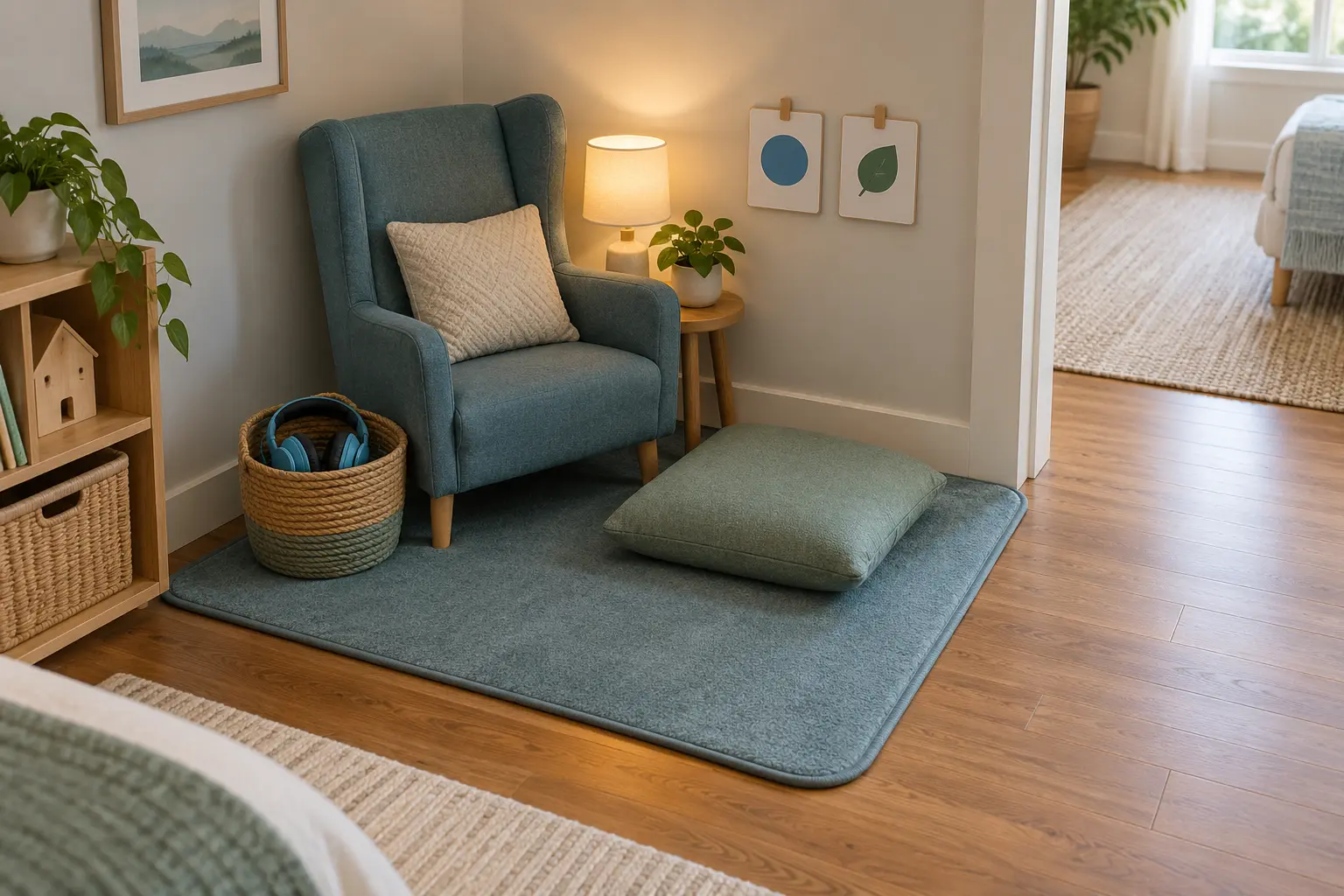
Build a flexible corner with a clear exit
Define a small boundary, add only a few optional supports, and preserve an open path so the child never feels trapped in the space.
- Use supportive seating that the child can enter and leave safely.
- Make light adjustable and keep cords secured and inaccessible.
- Offer a simple way to request quiet, help, a break, more, stop, or leave.
- Store extra tools nearby rather than displaying everything at once.
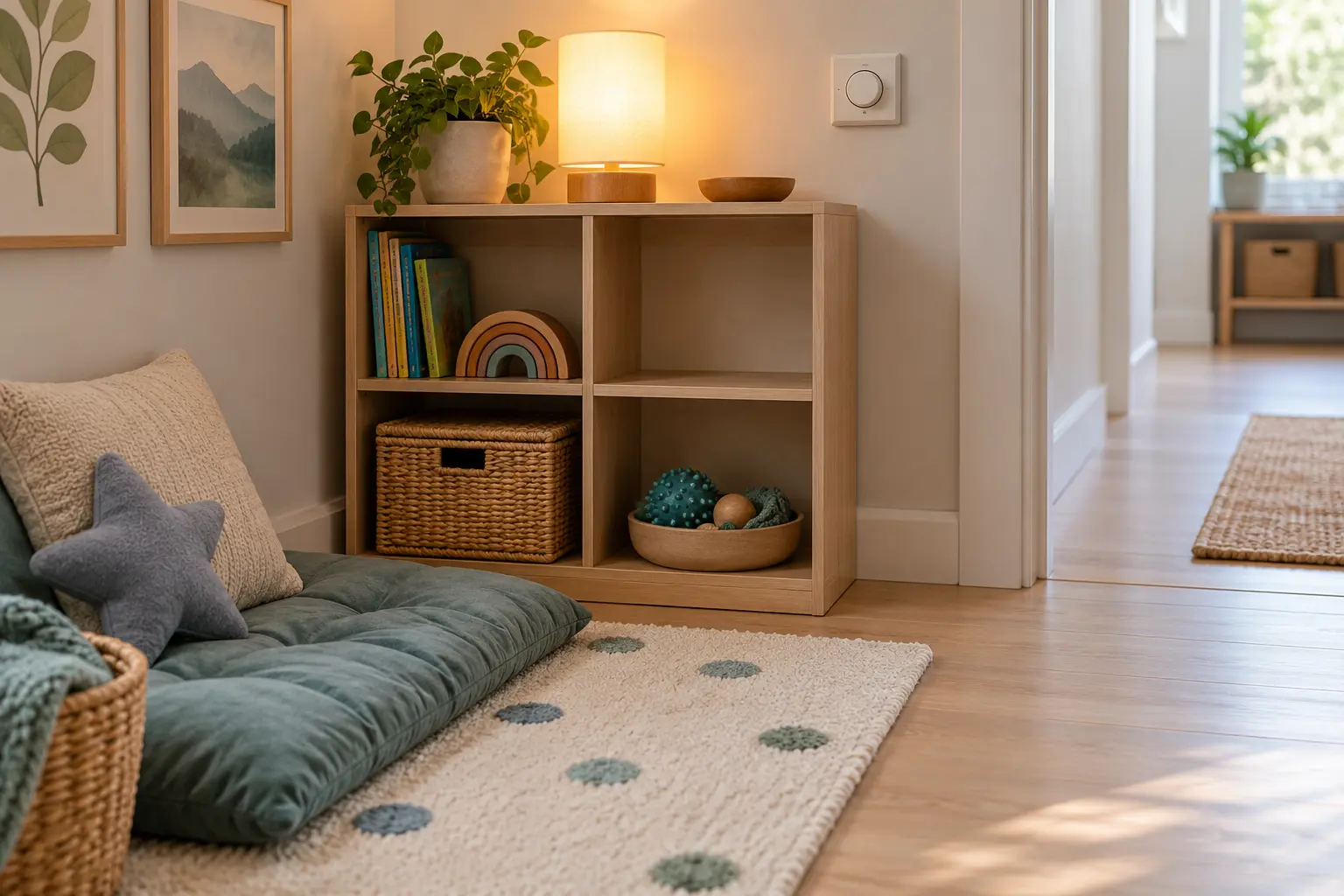
Test one variable, simplify, and adjust
Try the corner during ordinary low-pressure moments. Change one feature at a time, remove what is ignored or distressing, and keep the setup easy to reset.
- Introduce the corner when the child is not already in crisis.
- Treat yes, no, stop, more, different, and leave as valid responses.
- Adjust light, sound, texture, or seating one variable at a time.
- Review the corner as mobility, size, interests, and routines change.
The decisions that matter
Function first. Beauty follows the plan.
Choice
Every support should be optional, including whether to use the corner at all.
Communication
Use words, pictures, gestures, or devices the child already understands.
Adjustability
Let light, sound, pressure, movement, and enclosure change with the day.
Dignity
Keep the space comfortable, age-respectful, and free from public behavior tracking.
Preparation, not emergency response
Keep the setup simple enough to inspect.
This is an everyday room-planning guide. It does not replace emergency instructions, medical guidance, an individualized safety plan, or the directions supplied with a product.
- Maintain a clear exit and the supervision level appropriate to the child, room, and activity.
- Secure cords, furniture, batteries, weighted items, small parts, and anything that could tip, wrap, pinch, or obstruct breathing.
- Use movement or weighted equipment only within applicable manufacturer guidance and individualized professional advice when needed.
- Stop using an item that causes pain, distress, dizziness, breathing difficulty, skin changes, or unsafe behavior.
- Use the family’s established emergency plan during an actual emergency. Do not rely on this corner as an emergency-response strategy.
This page does not ask for or store a child's name, diagnosis, schedule, behavior history, or other identifying information. Keep personal observation notes offline and share them only with people you choose.
Frequently asked
Practical answers before you begin
Does a sensory corner need special equipment?
No. Supportive seating, lower light, headphones, a familiar object, a firm cushion, or simply a quieter boundary may be enough. Buy only after a specific need is clear.
Should the corner be used as a reward?
No. Access to regulation support should not depend on compliance, completing work, speaking, or behaving in one approved way.
Can a child use the corner for movement?
Possibly, if there is enough safe clearance and the activity matches the child’s needs and supervision plan. A separate open-floor area may work better for larger movement.
What if the child never uses it?
Remove assumptions before adding more products. Check the location, light, sound, seating, privacy, and whether the child actually wants a designated corner.