
9 Design Details That Make a Home Feel Like a Private Retreat
Thoughtful color, expressive materials, and spaces that make everyday life feel a little more considered.
Imagery in this feature is AI-created design inspiration, not a photographed property or exact product imagery.
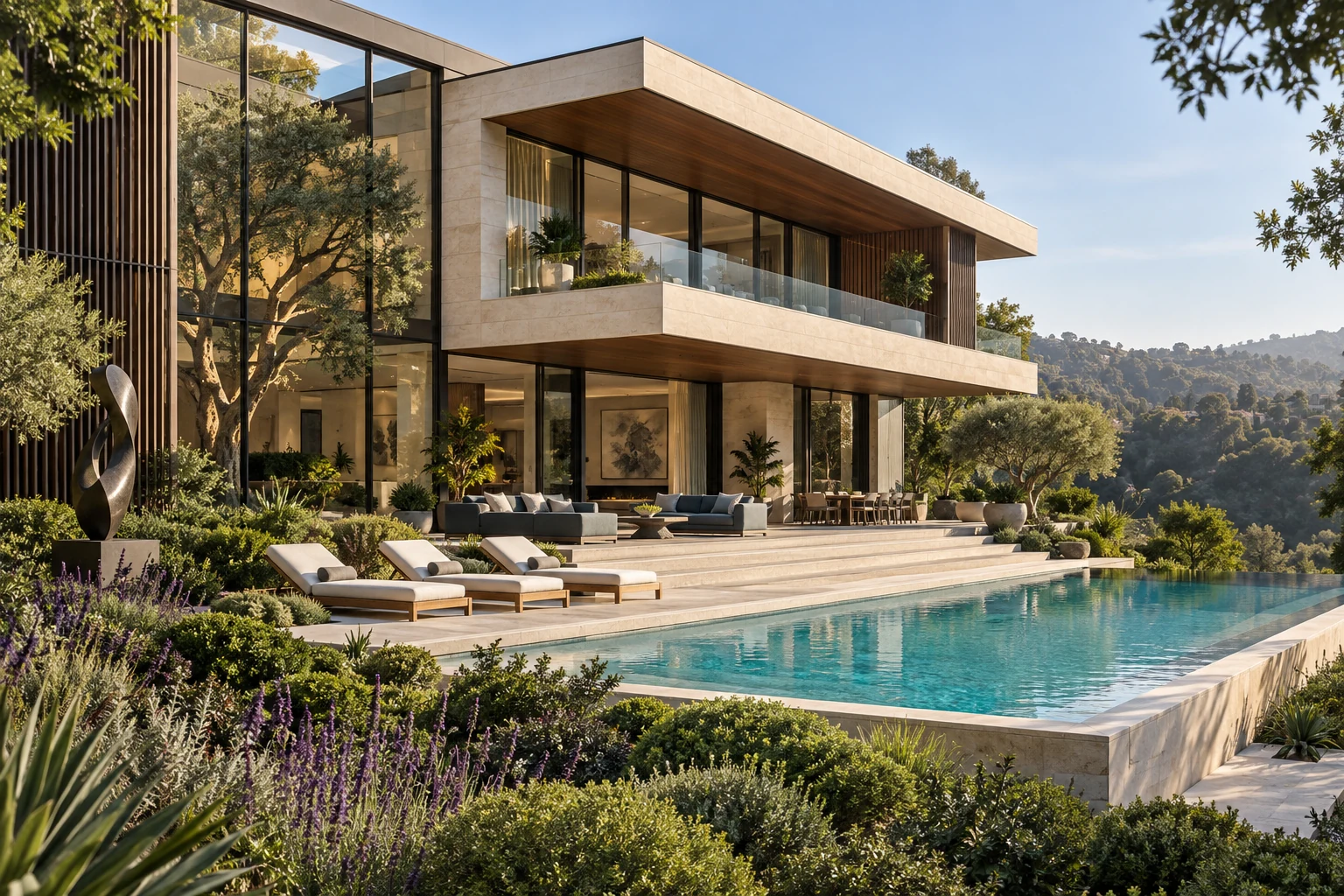
Think about the room you are happiest to come home to. Perhaps it catches the afternoon light, has a chair that feels just right, or holds something you would never replace.
That feeling is a useful starting point for design. In this imagined Brentwood-inspired retreat, stone, wood, color, and garden views work together. Each room has a purpose and its own character. Here are nine details to borrow—and ways to begin with the home you already have.
Give your favorite view room to breathe
In the exterior concept, broad glazing and layered planting make the garden part of the experience of being indoors. The relationship between the rooms, terrace, and landscape is the detail to borrow.
Look at your home from the places where you actually sit. What can you see from the sofa, breakfast table, or bed? A leafy outlook deserves a clear sightline. A less appealing view may benefit from an intentional arrangement of outdoor plants or adjustable window treatments.
Choose one color worth building a room around
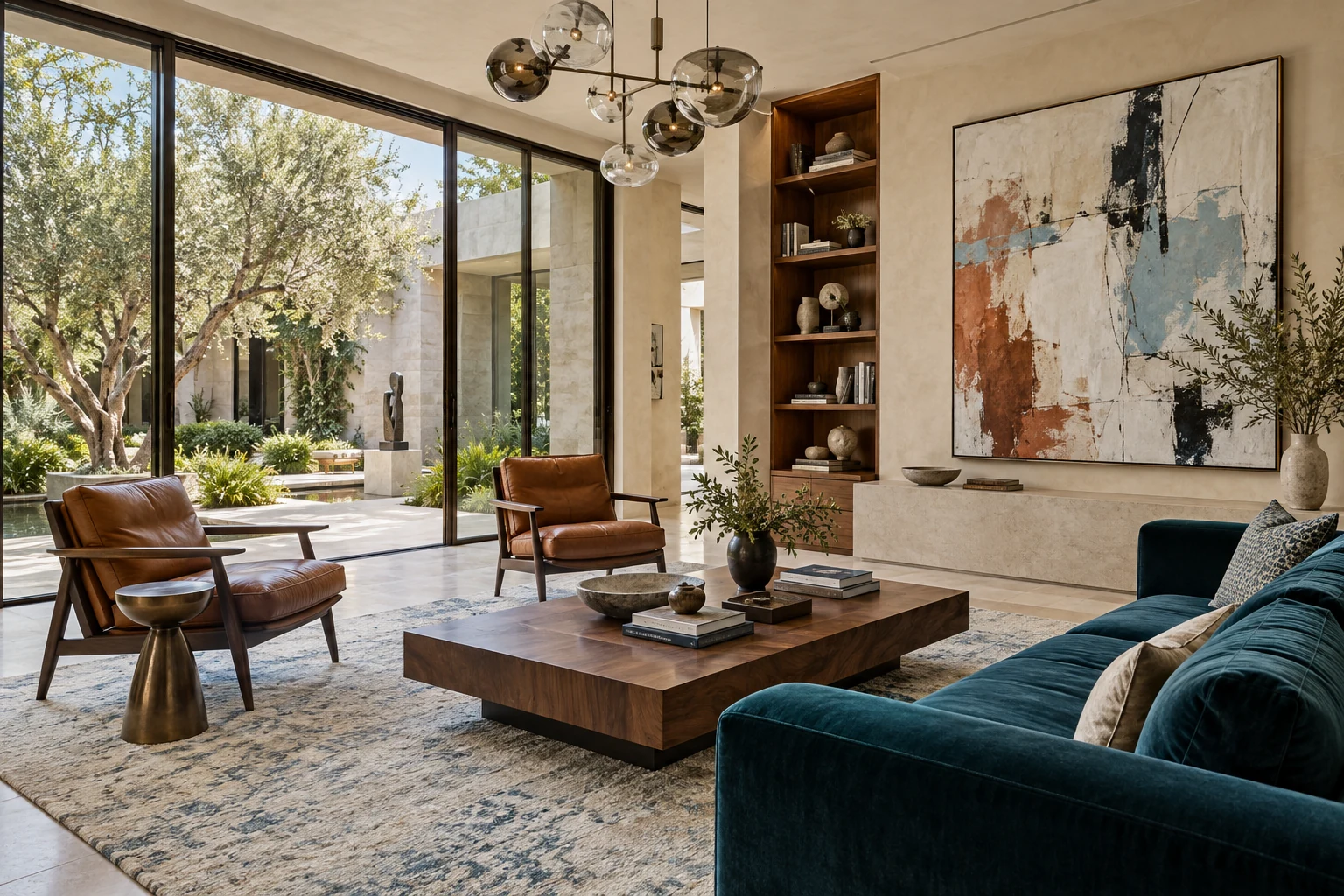
The living room starts with a deep teal sofa. Cognac leather, walnut, pale walls, and touches of blue in the artwork give that color a setting. You notice the sofa, then discover the rest of the room.
Begin with a color you would happily live with every day. Give it a clear home in one substantial piece, then repeat it more quietly in a textile or artwork. Let other materials provide variety.
Mix materials that feel different
Soft upholstery, smooth leather, expressive wood grain, glass, and metal give the living room depth. The shapes stay fairly simple, allowing the surfaces to contribute character.
A room full of matching finishes can leave you wanting to add more objects. First, look for a missing texture. A wood table may bring warmth to a room dominated by glass; a woven textile may soften a collection of polished surfaces.
Arrange seating for the evening you want to have
The living-room concept places chairs and a sofa around a shared table, with the garden beside the group. It suggests a place to talk, read, listen to music, or spend an unhurried evening together.
Decide which activity matters most in your room. Then test whether the furniture supports it. Can two people speak comfortably? Can someone reach a drink without stretching? Can others walk through while the room is in use?
Let one beautiful surface lead the kitchen
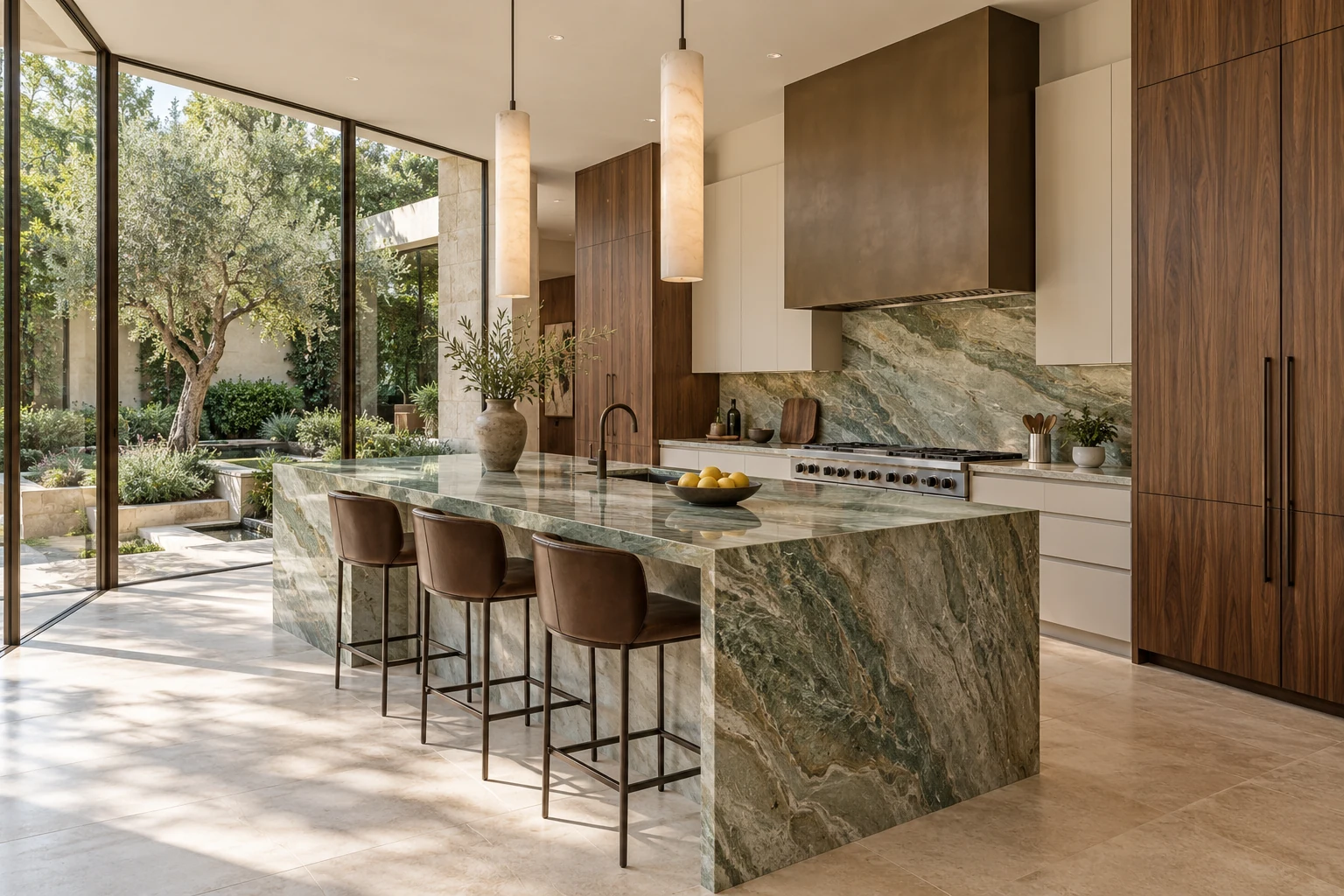
The kitchen concept gives green-veined stone a starring role, repeating its appearance on the island and backsplash. Walnut cabinetry and a bronze-colored hood provide a strong supporting palette.
This is a useful way to plan a kitchen: choose the surface you most want to notice, then compare every other finish alongside it. Hardware, stools, lighting, and accessories can each contribute without all demanding attention.
Make lighting useful at more than one moment
The concepts combine statement fixtures with light placed where activities happen: near the bed, over the island, and around seating. A beautiful pendant can be one part of a room’s lighting plan.
Think through an ordinary day. Preparing food, reading, getting dressed, and relaxing after dinner call for different light. Plan around those activities before choosing fixtures solely for their appearance.
Create a bedroom with somewhere to pause
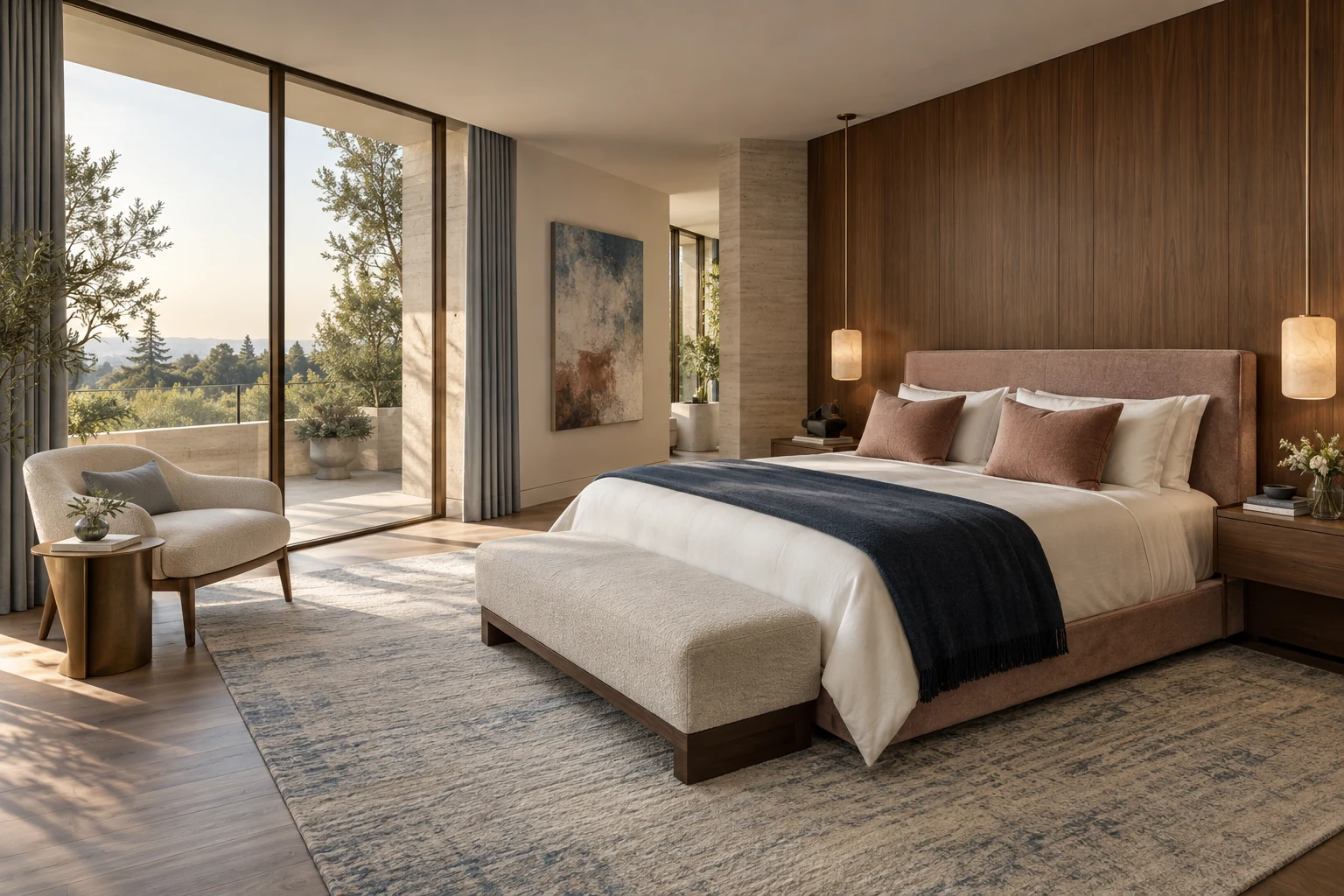
Rose upholstery, blue textiles, and walnut give the bedroom a distinct mood while connecting it to the rest of the imagined home. The chair near the glazing adds a place to read or enjoy a quiet morning.
If space allows, give the room one small function beyond sleep: reading, dressing, or sitting with a cup of tea. Choose furniture that fits that function comfortably. In a compact bedroom, a clear bedside surface and well-placed reading light may be the better choice.
Design the outdoors around a real routine
A pool makes an impressive photograph. A sheltered seat you enjoy using can make an ordinary afternoon better. In the exterior concept, seating, shade, and planting help turn the terrace into a place to spend time.
Choose the outdoor activity you want most: breakfast, reading, family meals, or conversation. Build a usable setting for it first. On a smaller patio, that could mean two comfortable chairs and a table placed where you actually enjoy the light.
Leave space for things that belong to you
The rooms include art, books, and ceramics—details that invite a closer look. In your own home, those choices can reflect your life: a photograph you took, an object from a trip, a favorite record, or a piece you have loved for years.
Give a meaningful object a considered place before buying accessories to fill the room. Try it against different backgrounds and leave enough space around it to appreciate its shape or story.
Choose one room. Make one useful change.
Before starting a shopping list, answer these three questions:
- What do I want to enjoy doing in this room?
- What currently makes that harder?
- Which change would make the biggest difference: layout, light, color, comfort, or storage?
Start there. A home begins to feel more personal when its design supports the way you want to live.
Further reading behind the design direction
These sources informed the broad themes of materiality, color, art, and indoor–outdoor living. The room concepts and practical suggestions above are The Elevated Estate’s editorial interpretation.
- Luxe Interiors + Design: William Hefner and Jenn Feldman’s Brentwood home — January 14, 2026.
- Woods + Dangaran: Nightingale — the architect’s account of materials, courtyard planning, and outdoor connections.
- Architectural Digest: Studio Emblem & Co.’s Hollywood Hills home — December 19, 2025.