
The Elevated Estate / Restorative Spaces
Make room for a slower moment.
Create an indoor–outdoor retreat around a view, a comfortable place to pause, and the rituals you want to make room for.
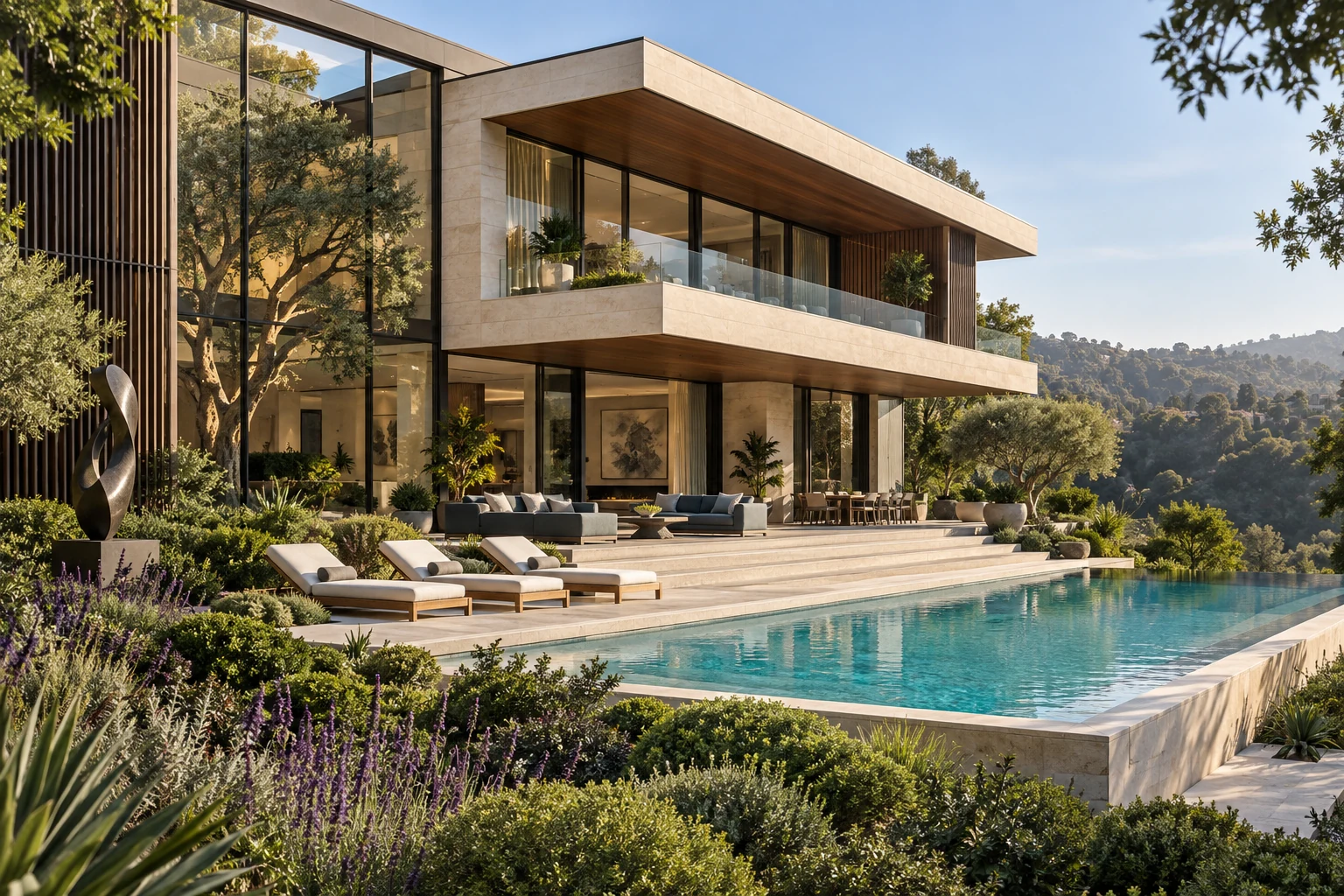
A generous terrace and a garden view make this concept feel expansive, but its most useful idea works at a much smaller scale: a place to pause with an easy connection to the outdoors. That could be a balcony chair, a sheltered terrace, or an indoor seat near a window. Start with the experience you want, then choose what supports it.
Imagery is AI-created design inspiration, not a photographed property or exact product imagery.
01 / Restorative Spaces
Choose the place before the furniture.
Notice the view, privacy, nearby movement, and how easy the spot is to reach. A beautiful corner that feels exposed or requires carrying everything across the house may be less inviting in practice.
If outdoor space is limited, look for an indoor seat with a view you enjoy. Arrange the area around the actual opening and available floor space rather than attempting to imitate a large terrace.
02 / Restorative Spaces
Make the transition comfortable.
Consider the whole route from indoors to the seat, including doors, changes of level, and where shoes or a tray will go. Keep the passage useful when furniture is occupied.
A shared color or material can connect the two areas visually, but choose finishes for the conditions in each location. Confirm outdoor suitability and maintenance with the supplier. Consult an appropriate professional for alterations to thresholds, drainage, or access.
03 / Restorative Spaces
Plan for the conditions you actually have.
Observe sun, shade, wind, and privacy across your preferred time of day. Consider whether the space needs shade, a different seat position, or somewhere to store cushions when they are not in use.
Check the exact furniture’s exposure limits, care, storage needs, and warranty. For outdoor lights or shade structures, follow product requirements and get qualified installation where needed. A sheltered photograph does not establish suitability for your location.
04 / Restorative Spaces
Let the atmosphere follow your preferences.
Some people enjoy soft background sound, moving foliage, or a textured throw; others prefer stillness and fewer sensory inputs. Choose a small number of adjustable elements and keep it easy to change them.
An everyday retreat does not need equipment or a prescribed routine. If you are creating a dedicated sensory space, use the preferences of the person who will use it as the starting point.
Explore sensory and wellness spaces →05 / Restorative Spaces
Keep the invitation simple.
A small surface for a drink, a reachable reading light where appropriate, or a nearby place for a book may be all the support your ritual needs. Keep the setting easy to prepare and easy to leave tidy.
Review it after a week of ordinary use. If you are not choosing to spend time there, reconsider location, comfort, or convenience before adding decorative pieces.
Adapt the idea
Make it work for your home.
An apartment or small balcony
Check building rules and the available space before buying. Protect access and choose pieces whose care and storage needs you can accommodate.
An indoor retreat
Use the view, a comfortable seat, and lighting suited to your activity. A connection to outdoors can come from a window without adding an outdoor living area.
A shared family space
Agree on how the spot will be used and keep preferences adjustable. Preserve clear routes and plan any child-specific space around the child and appropriate supervision.
The considered purchase
A final check before you buy.
- The location works at the time you intend to use it.
- Access remains practical with doors open and seats occupied.
- Outdoor products are suitable for the actual exposure and installation.
- Care and off-season storage have a realistic place in the plan.
- The arrangement supports the preferences of the people using it.