
The Elevated Estate / Bedrooms
A bedroom that feels like your own retreat.
Plan a personal bedroom with comfortable circulation, considered color, useful lighting, and storage that supports the start and end of your day.
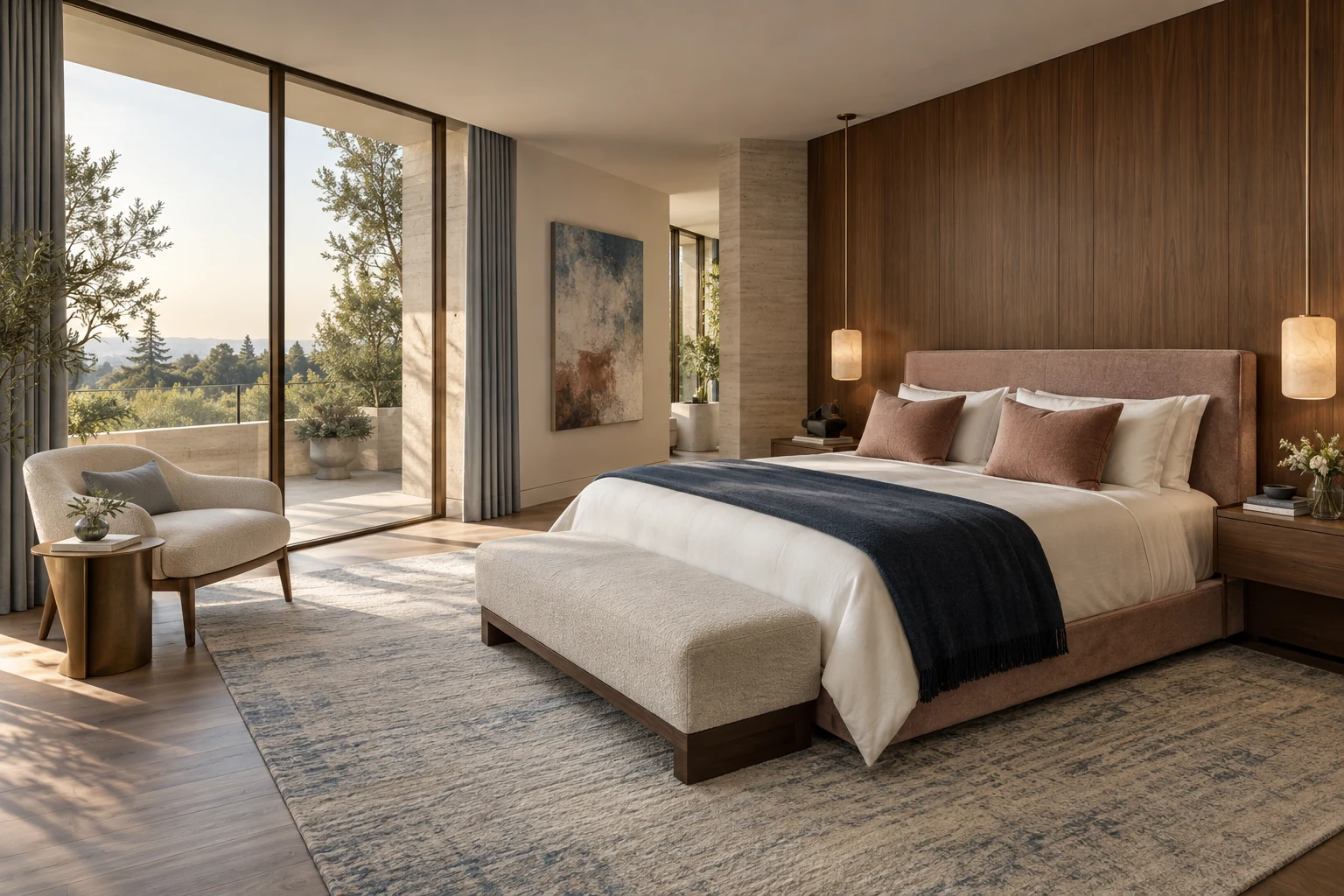
A bedroom can be expressive and restful at the same time. In this concept, rose upholstery and blue textiles sit against warm walnut, while a small seat creates somewhere to pause. The useful idea is a room shaped around your routines and preferences, not a requirement to recreate every piece.
Imagery is AI-created design inspiration, not a photographed property or exact product imagery.
01 / Bedrooms
Give the bed the right place.
Measure the complete bed frame, including the headboard, footboard, and any projecting upholstery. Mattress dimensions alone do not tell you how much room a bed will occupy. Add the bedside furniture before judging the layout.
Check access to the sides you use, wardrobe doors, drawers, windows, and the room entrance. The largest bed that technically fits may leave too little room for comfortable movement or for another person to get dressed.
Record your bedroom measurements →02 / Bedrooms
Build a palette around how you want to feel.
Choose a color you enjoy seeing at the beginning and end of the day. Rose, blue, and warm wood create a layered direction here; your own starting point could be an artwork, existing headboard, or favorite textile.
Let textures provide some of the variety. Compare a smooth sheet, a textured cover, and the actual upholstery rather than buying every layer for its photograph. Comfort and care preferences vary, so treat tactile choices as personal.
Find a color and material direction →03 / Bedrooms
Make each bedside work independently.
Think about what happens from the pillow and the edge of the bed. Can you reach a light, set down a book, place a glass, and charge a device without trailing cables through the walking route? A narrow room may call for a different solution on each side.
Check the direction of reading lights from both sleeping positions. A shade or adjustable fitting can change where light falls, but its usefulness depends on the room and the person. Plan switches before adding decorative fittings.
Plan useful layers of light →04 / Bedrooms
Plan the windows for privacy and light control.
Observe what comes through the windows at the times you use the room. Streetlights, early daylight, overlooking, and reflections can each call for a different window treatment. Decorative curtains and practical light control do not always need to do the same job.
Check where a curtain will gather when open and whether it conflicts with bedside furniture, a door, or heating. Ask the supplier about the actual fabric’s opacity, lining, mounting needs, and care rather than assuming the appearance tells you.
Measure for curtains →05 / Bedrooms
Give everyday objects a place to land.
Plan storage around the things that collect outside the wardrobe: tomorrow’s clothes, reading material, jewelry, chargers, and worn-once layers. A beautiful chair becomes less inviting when it is the only available place to put them.
If a sitting corner fits, give it one clear purpose such as reading or dressing. In a smaller room, an uncluttered bedside surface may serve you better than an extra seat. Keep storage accessible to the person who uses it.
Adapt the idea
Make it work for your home.
If your bedroom is small
Prioritize the bed, clear routes, and storage access. Compare the footprint of each frame and bedside surface; wall-mounted options still need appropriate fixing and usable reach. Avoid filling every remaining corner.
If you share the room
Discuss light, texture, storage, and temperature preferences separately before choosing a shared scheme. Individual reading lights or different bedding layers can make a coordinated room more comfortable for both people.
If you are refreshing gradually
Start with the part of your routine that is hardest. Improve reachable light or window control, then choose textiles. Keep furniture that fits and works while you refine the details around it.
The considered purchase
A final check before you buy.
- The complete frame dimensions and delivery route are confirmed.
- Wardrobe doors and drawers open without blocking essential access.
- Bedside surfaces, switches, and charging arrangements are reachable.
- Window treatments suit the privacy, light control, and mounting requirements.
- Bedding and upholstery feel comfortable to you and have manageable care requirements.